A shared-responsibility model divides delivery responsibilities across developers, operators, and security officers while aligning their methods, constraints, and interfaces. section 12.7 section 12.6
Modern application delivery assigns responsibilities across several operational concerns:
- Developers handle application development, automated testing, and releases. section 12.6
- Operators keep applications, platforms, and infrastructure working against agreed performance and availability indicators. section 12.6
- Security officers apply agreed policies and security standards across environments, structures, and layers. section 12.6
- Teams divide configuration ownership while meeting at common interfaces such as code repositories, image builds, and Kubernetes manifests. section 12.6
Centralized management and unified toolsets improve cooperation, while external pipeline integrations preserve flexibility. Single clusters with multiple namespaces suit single-site or nonproduction setups; multiple clusters support high availability, global latency requirements, reduced infrastructure-change impact, and gradual rollouts. section 12.7 section 12.6
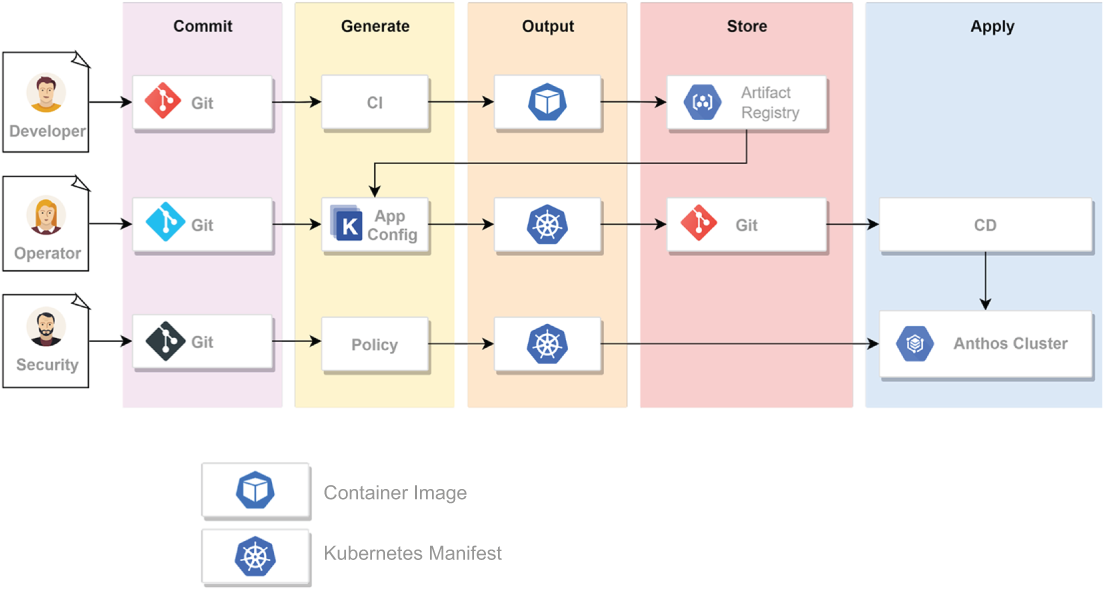
Maps delivery personas to shared code repositories and clarifies where responsibilities intersect. section 12.6





