Simulation reproduces a process’s behavior or structure; instantiation realizes the process itself. A computer can simulate a storm without making anything wet, while a calculator performs arithmetic. Whether simulated reasoning counts as reasoning remains contested. section 9.1.4
Functionalism makes performance relevant: what a system does may matter more than what it is made of. But successful imitation alone does not settle whether a system understands or means what it says. Current AI may show reasoning and adaptation while lacking aspects of human cognition, so neither equivalence nor empty imitation follows automatically. section 9.1.4 section 1.5.8 section 9.5.6
Figure 9.3 Same tools, different act. A master copyist may use the same tools and produce a visually similar result, yet intention, authorship, history, and context still shape how we judge the work. The example shows why skilled performance can be real without settling what kind of act the performance belongs to.
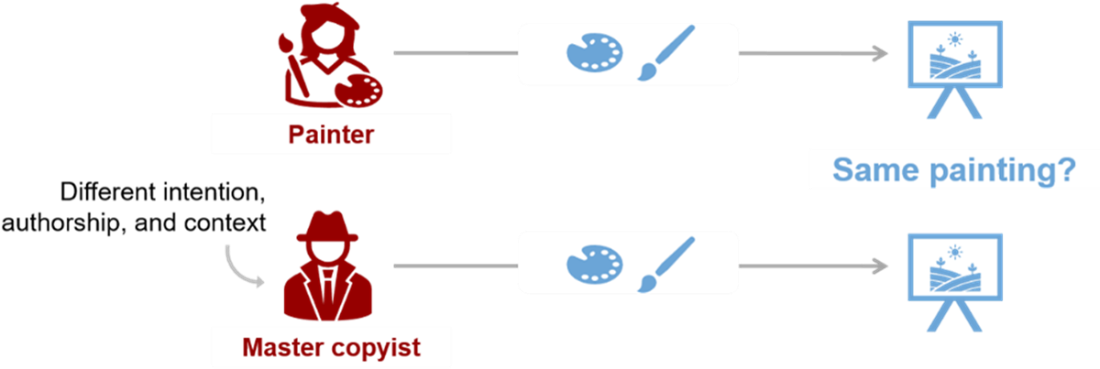
A copyist’s visually similar painting illustrates how skilled performance can be real while authorship, intention, and context affect what kind of act it represents. section 9.1.4