SQLite
SQLite is a self-contained, serverless relational database engine implemented as a software library that stores and queries databases in files or memory.
A Pythonic Adventure: From Python basics to a working web app
SQLite is an embedded relational database engine that stores a database in a self-contained file.
- How it is used
- Replaces JSON-based order loading and saving with database-backed storage and queries.
- How deep it goes
- Explains connections, cursors, tables, inserts, commits, SELECT queries, and fetched rows through a working order application.
- Examples
- Uses an orders.db file, drink orders, an orders table, insertion, retrieval, and an HTML order list.
- What you can do after
- Operate SQLite through Python to persist new orders and retrieve them for display.
Read how A Pythonic Adventure: From Python basics to a working web app explains SQLite →
Coding with AI
SQLite is a lightweight embedded relational database engine that stores a database in a local file.
- How it is used
- Uses SQLite to store a small practice-test question pool without a more complex database setup.
- How deep it goes
- Walks through CSV import, key configuration, connection prompting, and a Flask retrieval path, without explaining SQLite internals.
- Examples
- Uses a radio-license practice-test question pool and an AI-generated connection query as concrete examples.
- What you can do after
- Apply it via DB Browser for SQLite to create a database, import question data, and inspect the resulting table.
Data Analysis with LLMs
SQLite is a lightweight relational database engine that stores an entire database in a self-contained file and supports SQL.
- How it is used
- Stores tabular data for SQL analysis and supplies database structure to a natural-language query interface.
- How deep it goes
- Walks through installation, table creation, CSV import, query execution, and schema extraction without exploring database-engine internals.
- Examples
- Uses video-game records, a CSV import, a row-count query, a Colab query notebook, and Python schema-extraction code.
- What you can do after
- Operate/configure it to load tables, run SQL queries, and retrieve table definitions for a query interface.
Practices of the Python Pro
SQLite is a lightweight relational database engine that stores an entire database in a single file.
- How it is used
- Supports the persistence layer by storing and retrieving application data through Python's sqlite3 module.
- How deep it goes
- Explains single-file storage, connections, SQL statements, and CRUD methods, but stops before advanced database packages.
- Examples
- Uses a bookmarks table, parameterized inserts, record deletion, selection, filtering, and title sorting.
- What you can do after
- Operate/configure a SQLite database through Python connections, tables, parameterized queries, and CRUD methods.
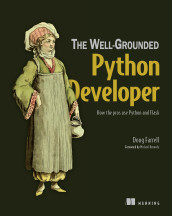
The Well-Grounded Python Developer: How the pros use Python and Flask
SQLite is an embedded relational database engine that stores a complete database in a local file.
- How it is used
- Provides persistence for users, transactions, and posts without requiring a separate database server during application development.
- How deep it goes
- Explains the in-process deployment choice and one SQLite-specific modeling limitation, while leaving detailed SQLAlchemy usage for later.
- Examples
- Uses persisted login users, a transaction database, and a post sort-key function that works around SQLite’s nonprimary-key autoincrement limitation.
- What you can do after
- Apply it via SQLAlchemy to persist application data and recognize when a model needs a SQLite-specific workaround.
Read how The Well-Grounded Python Developer: How the pros use Python and Flask explains SQLite →
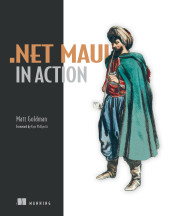
.NET MAUI in Action
SQLite is an embedded, open-source relational database engine implemented as a self-contained library.
- How it is used
- Persists structured application data locally in .NET MAUI apps, including records that must survive later launches.
- How deep it goes
- Builds a working database-backed app with models, packages, paths, encryption, table creation, and asynchronous retrieval.
- Examples
- Uses the MauiTodo application, TodoItem model, encrypted database, title entry, date picker, and displayed task list.
- What you can do after
- Build it from scratch as a persistent, optionally encrypted data store in a .NET MAUI application.

Python How-To
SQLite is an embedded relational database engine that stores an application's data in a local disk file without requiring a separate server process.
- How it is used
- Uses SQLite as a lightweight database option for a task-management application, alongside a CSV file.
- How deep it goes
- Walks through database creation, filtered retrieval, record updates, and deletion with Python and SQL.
- Examples
- Uses a task table with status and urgency filters, editable records, and deletion by task ID.
- What you can do after
- Apply it via Python’s sqlite3 module to create a database and retrieve, update, and delete task records.

.NET in Action, Second Edition
SQLite is an embedded relational database engine that stores a complete database in a local file or in memory.
- How it is used
- Provides SQL-backed storage for EF Core application code and lightweight in-memory databases for integration tests.
- How deep it goes
- Works through configuration, connection lifetime, schema creation and asynchronous queries, without descending into SQLite engine internals.
- Examples
- Uses a book catalog with ratings and a comic-search integration test with faked HTTP responses.
- What you can do after
- Apply it via EF Core to configure SQL storage, keep an in-memory database alive and isolate parallel tests.
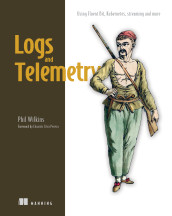
Logs and Telemetry
SQLite is an embedded relational database engine that stores a complete database in a local file without requiring a separate server process.
- How it is used
- Tracks file-read progress so restarted Fluent Bit tail inputs avoid reingesting logs from long-running processes.
- How deep it goes
- Explains DB-file configuration, locking, source isolation, worker effects, and journaling-related options without detailing SQLite internals.
- Examples
- Demonstrates a tail configuration that reads a local file, stores progress in tracking-file-read.db, and writes events to stdout.
- What you can do after
- Operate/configure persistent file-tail progress with DB and DB.locking settings for restart recovery and source isolation.
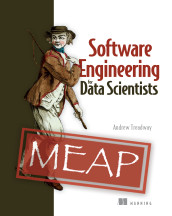
Software Engineering for Data Scientists
SQLite is an embedded relational database engine that stores a complete database in a local file.
- How it is used
- Uses SQLite to prototype storing and querying machine-learning predictions outside a Python session.
- How deep it goes
- Explains database creation, table definition, prediction upload, and querying, while deferring scheduled production jobs.
- Examples
- Demonstrates a customer-churn prediction table, sqlite3 queries, pandas read_sql, SQL statements, and DB Browser views.
- What you can do after
- Apply it via sqlite3, pandas, or SQL to persist and retrieve model predictions in a local database.
Read how Software Engineering for Data Scientists explains SQLite →
Latency
SQLite is an embedded relational database engine that stores and processes database contents within an application process.
- How it is used
- Deploys an embedded database inside a REST API to colocate data and computation and reduce request latency.
- How deep it goes
- Demonstrates connection sharing, query execution, and HTTP benchmarking, but does not detail SQLite storage internals or schema design.
- Examples
- Compares SQLite and PostgreSQL through a Rust /hello endpoint, wrk measurements, and latency-distribution analysis.
- What you can do after
- Builds a Rust REST endpoint backed by SQLite and evaluates it with wrk latency and throughput measurements.
Code Like a Pro in Rust
SQLite is an embedded relational database engine that stores database state in a file and operates within the application process.
- How it is used
- Provides the stateful database layer for a horizontally scalable Rust HTTP API.
- How deep it goes
- Explains configuration, pooling, file creation, migrations, and schema choices, while deferring broader database complexity.
- Examples
- Uses a db.sqlite file, an init_dbpool function, and a todos table migration with timestamp and primary-key defaults.
- What you can do after
- Apply it via SQLx to initialize a SQLite database, manage pooled access, and run schema migrations.

Go by Example
SQLite is an embedded relational database engine that stores data in a local file or in memory without requiring a separate server process.
- How it is used
- Provides persistent storage for a Go link service without requiring a separately installed database server.
- How deep it goes
- Explains driver registration, connection establishment, pool reuse, and pool tuning, while leaving schema and query implementation to subsequent steps.
- Examples
- Uses a persistent link server, links.db, a Dial helper, HTTP endpoints, and curl requests to demonstrate storage across restarts.
- What you can do after
- Build it with database/sql and a SQLite driver, then configure a link service to preserve records across process restarts.

Learn Docker in a Month of Lunches, Second Edition
SQLite is an embedded relational database engine that stores a database in a local file.
- How it is used
- Provides local persistence for a small application running in a single container.
- How deep it goes
- Defines SQLite as a local database file and addresses volume management, but stops short of internals or query syntax.
- Examples
- Uses a containerized to-do app whose SQLite file is managed with a volume.
- What you can do after
- Operate small containerized applications with local SQLite persistence and recognize when PostgreSQL is more suitable.
Read how Learn Docker in a Month of Lunches, Second Edition explains SQLite →

DuckDB in Action
SQLite is an embedded relational database library primarily used for transactional data storage in applications.
- How it is used
- Queries existing SQLite files through DuckDB for analytical work without persisting an intermediate DuckDB storage model.
- How deep it goes
- Explains extension loading, attachment, inspection, type mismatches, and view-based casting, but not SQLite internals.
- Examples
- Uses a 300 MB European soccer SQLite database, Player views, schema inspection, and latest-player-rating queries.
- What you can do after
- Operate/configure SQLite access through DuckDB, inspect tables, diagnose type mismatches, and build casted analytical views.

Grokking Statistics
SQLite is a self-contained, serverless relational database engine that stores an entire database in a single file.
- How it is used
- Supports local relational storage, SQL retrieval, and practical data analysis without requiring a database server.
- How deep it goes
- Introduces SQLite’s role and basic workflows but stops short of database internals or detailed implementation guidance.
- Examples
- Uses a flight-schedule query, a pandas tornado database workflow, and a resumable batch-download workaround.
- What you can do after
- Apply it via Python and SQL to retrieve data, load results into pandas, and build simple local workflows.
Also covered in
- ASP.NET Core in Action, 3e
- Rust Web Development
- Apache Kafka in Action
- Learn Haskell by Example
- Learn SQL in a Month of Lunches
- Enterprise RAGIn early access (MEAP)
- The Quick Python Book, Fourth Edition
- AI Agents and Applications
What to know first
- SQLSQL is a standardized declarative language for defining, querying, and manipulating data in relational database systems.
- NoSQL databaseA NoSQL database is a database system organized primarily around nonrelational data models rather than the traditional relational table model.
- gradient boostingGradient boosting is an ensemble-learning technique that sequentially adds predictive models fitted to reduce a loss by following its gradient.
- web applicationA web application is software that provides functionality through web technologies and is accessed over a network, typically through a browser or other web client.
Related concepts
- PostgreSQLcontrasts with · PostgreSQL is an open-source object-relational database management system that stores and queries data using SQL and supports extensible data types and operations.
- Fluent Bitused by · Fluent Bit is a lightweight, open-source telemetry agent for collecting, processing, and forwarding logs and other event data.
- arraycontrasts with · An array is an ordered collection of elements organized in one or more dimensions and accessible by position or index.
- databasekind of · A database is an organized persistent data store, typically managed by software, that supports storing, retrieving, and modifying data.
- MySQLalternative to · MySQL is a relational database management system that stores, manages, and queries structured data using SQL.
- SQLuses · SQL is a standardized declarative language for defining, querying, and manipulating data in relational database systems.
Questions about SQLite
What is SQLite?
SQLite is a self-contained, serverless relational database engine implemented as a software library that stores and queries databases in files or memory.
Which Manning books explain SQLite?
A Pythonic Adventure: From Python basics to a working web app, Coding with AI, Data Analysis with LLMs, Practices of the Python Pro, The Well-Grounded Python Developer: How the pros use Python and Flask, .NET MAUI in Action, Python How-To, .NET in Action, Second Edition and 8 more.
What should I know before learning SQLite?
Manning books that teach SQLite usually introduce SQL, NoSQL database, gradient boosting and web application first.
What is the difference between SQLite and PostgreSQL?
SQLite is a self-contained, serverless relational database engine implemented as a software library that stores and queries databases in files or memory. PostgreSQL is an open-source object-relational database management system that stores and queries data using SQL and supports extensible data types and operations.
What is SQLite a kind of?
SQLite is a kind of database. A database is an organized persistent data store, typically managed by software, that supports storing, retrieving, and modifying data.
These guides are generated from the text of Manning books by Manning's knowledge graph and link to the sections they draw on. The full books are available on liveBook and at manning.com.