A stakeholder is a person or group that influences a platform’s requirements or outcomes without necessarily using the platform. Stakeholders may be leaders, decision-makers, regulators, or other interested parties inside or outside the organization. section 2.1.2
Customers and stakeholders have different success criteria. Stakeholders can legitimately require outcomes while still harming usability if they control the implementation; product teams should satisfy the outcome without sacrificing the customer experience. section 2.1.2 section 2.4
Handle stakeholder influence as part of platform product management:
- Use stakeholder priorities as a source of requirements and unconventional ideas, then qualify them with the platform’s value-flow process. section 2.3.2
- Treat ordinary requests as platform product requests rather than commitments, allowing the product team to accept or reject them against platform objectives. section 2.3.2
- Track stakeholder impact on platform delivery because unmanaged influence can determine whether the platform produces a return on investment. section 2.4
A platform feature-request board
A platform team can collect stakeholder requests in an idea queue or Feature Request board instead of promising a demand queue. The team then evaluates each request alongside developer feedback, industry trends, and platform usage. section 2.3.2
Figure 2.3 A stakeholder map visualizes a stakeholder’s influence over the backlog against their alignment to platform objectives. High-influence stakeholders must be highly aligned for a platform to succeed.
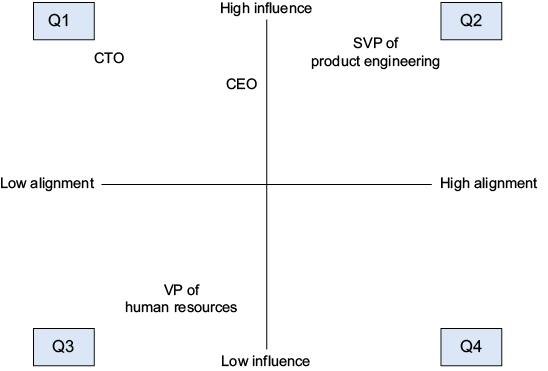
Map stakeholders by their influence over the backlog and their alignment with platform objectives; high-influence stakeholders require especially strong alignment. section 2.1.2








