A state transition changes an object or process from one permitted state to another. In clinical systems, it enforces order, preserves an audit trail, and records who changed what, for whom, why, and when. section 2.2.4 section 2.2
Clinical state transitions support several linked responsibilities:
- Advance an order through defined stages without skipping required steps. section 2.2.4
- Associate each transition with an actor, timestamps, and newly captured clinical data. section 2.2
- Coordinate concurrent state machines, allowing one result to update checklists or trigger clinician notifications. section 2.2.4
CBC laboratory order
A CBC order moves through states as the clinician signs it, staff collect the specimen, and the laboratory analyzes and finalizes the result. Each transition records relevant actors, timestamps, specimen details, and result data. section 2.2 section 2.2.4
Figure 2.6 State transition diagram for a CBC lab order.
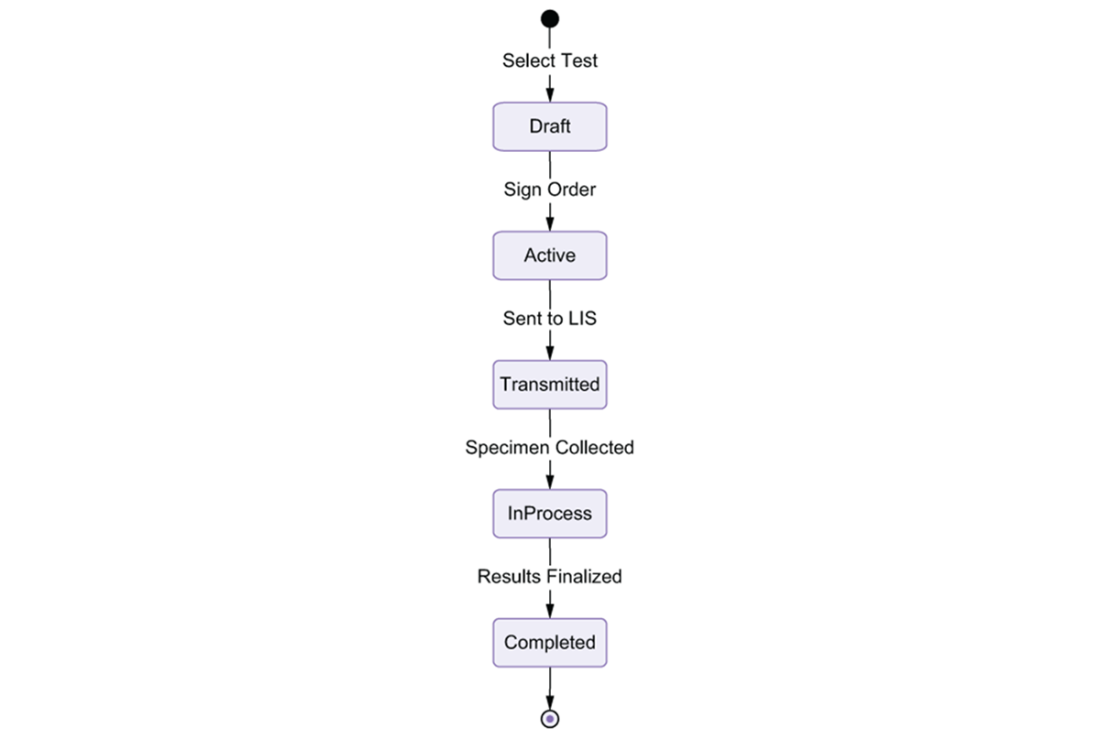
Use the state-transition diagram to inspect the permitted lifecycle of a CBC laboratory order. section 2.2.4