Language generation is the production of new text by a language model. Think of a phone keyboard suggesting what comes next: after “Hey, what are,” it might suggest “you” because that word commonly follows the phrase. A large language model (LLM) extends this idea beyond a single suggestion to produce paragraphs, answers, translations, or code. section 11.1
Figure 11.1 Example of autocomplete as a language model
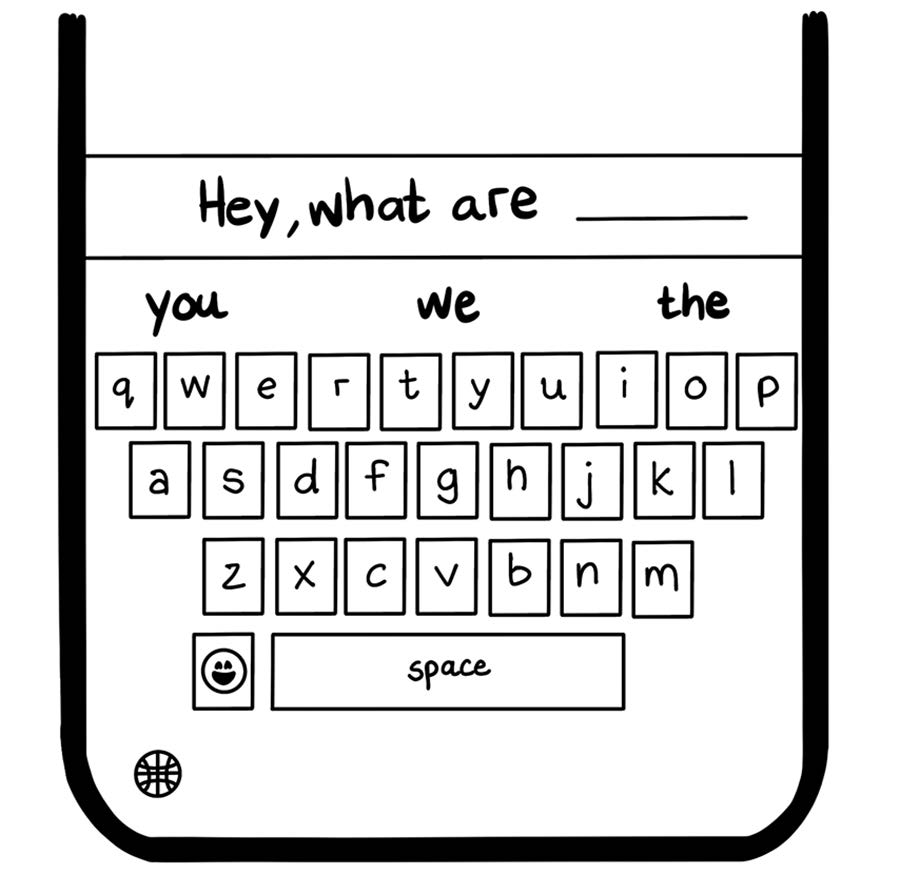
The autocomplete example illustrates the starting point: use the words already present to suggest what could follow. section 11.1
Generation differs from predicting a numerical value or assigning a category: its output is new content. LLMs learn language patterns from large amounts of text. Their Transformer architecture uses attention to focus on relevant earlier words when predicting what comes next; its other components help process that information. Those capabilities make longer, coherent responses possible. section 1.23 section 11.1
Drafting product descriptions
Suppose an online store has thousands of products and a list of specifications for each one. An LLM can turn those specifications into first-draft descriptions. A person still guides the desired direction and refines the output. The same draft-and-refine approach can help with articles, marketing copy, and reports. section 11.44



















