An engineering manager can finish a day of back-to-back meetings and still find an urgent planning document untouched. Time management means deciding where limited work time goes, then protecting time for the priorities that might otherwise be crowded out. It matters because managers must switch between projects, team support, and their own work, while engineers often need longer, uninterrupted focus blocks. section 14.0 section 14.1.2
Start with a prioritized to-do list and a calendar that reflects those priorities. Reserve focus blocks for work that needs concentration, preserve breaks, and consider a no-meetings day that you follow yourself. A tool such as Clockwise can help organize the calendar, but it does not decide which work matters most. section 2.5.10
Use the Eisenhower Matrix to review tasks by importance and urgency:
- Important and urgent: handle what needs immediate attention, but investigate repeated crises and plan ahead where possible. section 14.3.3
- Important but not urgent: protect time for work that advances long-term goals. section 14.3.3 section 14.5
- Urgent but not important: ask whether someone else can handle it; delegate when appropriate. section 14.3.2
- Neither important nor urgent: remove work that does not contribute to objectives. section 14.3.2
Figure 14.3 The four quadrants of the Eisenhower Matrix for time management
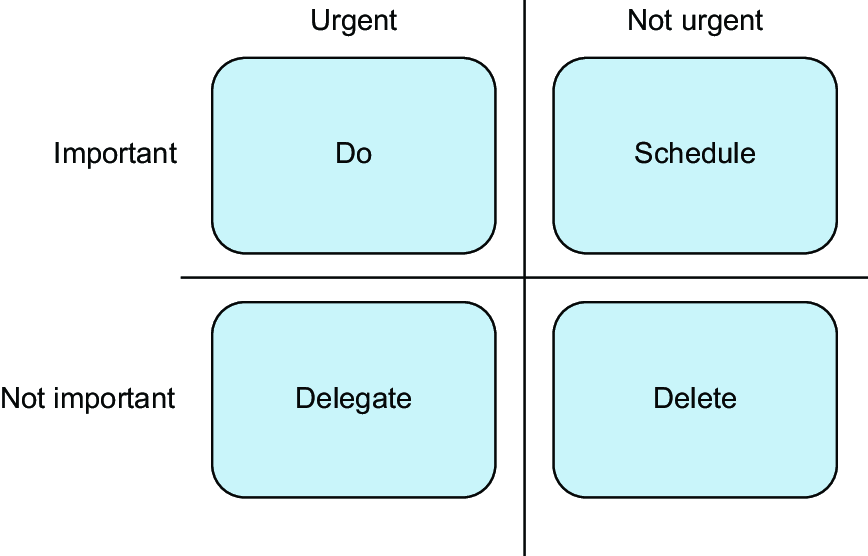
The four-quadrant figure provides a visual aid for sorting work before changing the calendar. section 14.3.2
Protecting time also means setting boundaries. Identify meetings that do not need your involvement, say no when a new request would jeopardize existing commitments, and offer constructive alternatives. A RACI matrix can help identify people who only need to be informed: they may be able to read meeting minutes instead of attending. Delegation can free your time while giving team members opportunities to grow. section 14.2.4 section 14.3.2
Find out where the week went
If the calendar feels full but important work keeps slipping, record how time is spent for a few weeks. Make rough estimates at day’s end, or log the previous 29 minutes every 30 minutes. Review the pattern across the four quadrants. Too much urgent work may call for better planning; too much delegable work may call for clearer points of contact. Discuss low-value commitments with stakeholders before dropping them. There is no single schedule that fits every manager, so adjust and review again. section 14.5 section 14.3.3
The goal is not simply to clear the to-do list. It is to make steady progress on projects and team members’ goals without letting constant demands create a growing backlog or burnout. Your schedule also sets an example: a late-night email can suggest that late-night work is expected. section 14.1.1 section 14.1

