Unified Modeling Language (UML) provides formal ways to model software systems from multiple perspectives. In testing, these models expose architectural and user-flow risks that a single model may miss. section 5.3.2
Use different UML diagram families to focus risk analysis:
- Structural diagrams, such as component diagrams, decompose architecture and focus risk generation on specific system parts. section 5.3.2
- Behavioral diagrams, such as sequence and use case diagrams, capture user flows and support user-focused risk prompts. section 5.3.2
Booking-list risk prompt
Represent a booking-list feature as a component diagram, then prompt: “Generate as many risks as possible for a BookingRequest class that sends a request to an Auth API to confirm whether BookingService can complete its request.” A sequence or use case diagram can instead model a logged-in user requesting bookings before authorization expires. section 5.3.2
Figure 5.6 A component diagram of the booking list functionality
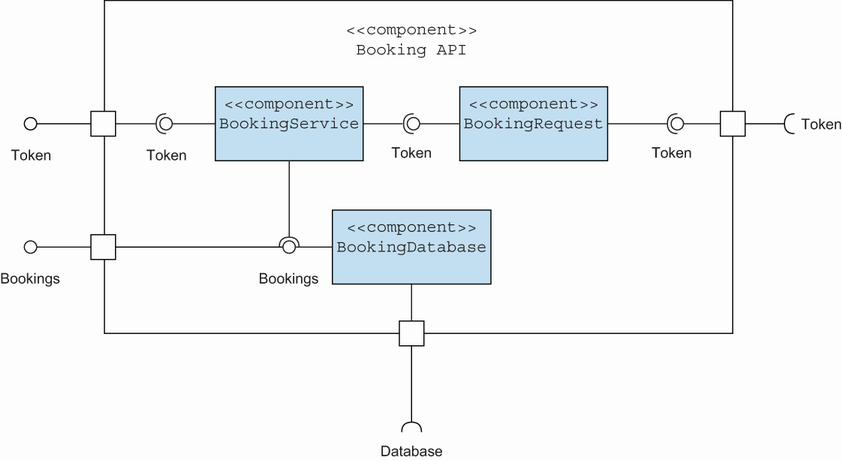
Inspect the booking-list component diagram to connect architectural elements with targeted risk prompts. section 5.3.2
Figure 5.7 A user flow diagram of the booking list functionality
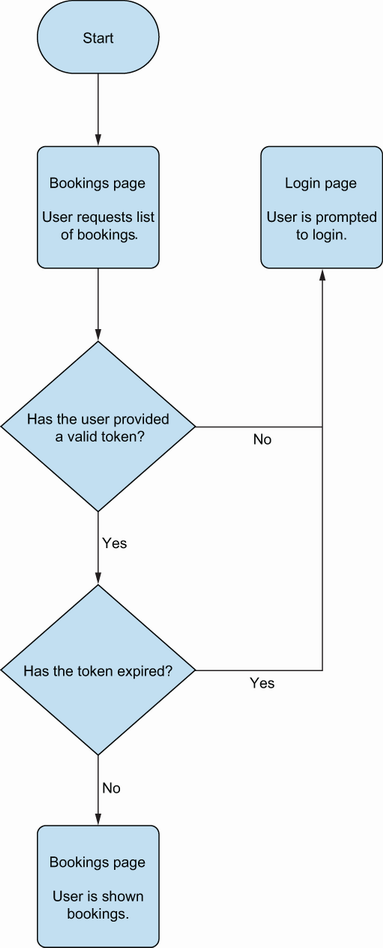
Inspect the booking-list user-flow diagram to derive risks from authentication, authorization, and booking retrieval behavior. section 5.3.2

