A VLAN is a logical network created by configuring switches to group devices across shared physical infrastructure. Like virtual cables, VLANs let devices in different locations act as if they share a local network. This segmentation can improve security and performance without adding physical equipment. section 11.8.2
VLANs help organizations organize devices and limit unnecessary communication:
- Group devices by switch port, IP subnet, MAC address, or protocol. section 11.8.2
- Keep sensitive systems, such as servers and administrative devices, separate from general users; a guest Wi-Fi network can also have its own VLAN. section 11.8.2
- Pair VLANs with subnets: VLANs enforce boundaries at Layer 2, while subnets use IP addressing at Layer 3. Using one without the other is described as a misconfiguration. section 11.8.3
One organization, several locations
An organization can place management, engineering, and IT devices in separate VLANs, even when those devices connect through switches in different offices. If an employee moves, a configuration change can keep their device on the same VLAN without rewiring. section 11.8.2
Figure 11.14 Network topology diagram showing segmented VLANs spanning distinct physical spaces
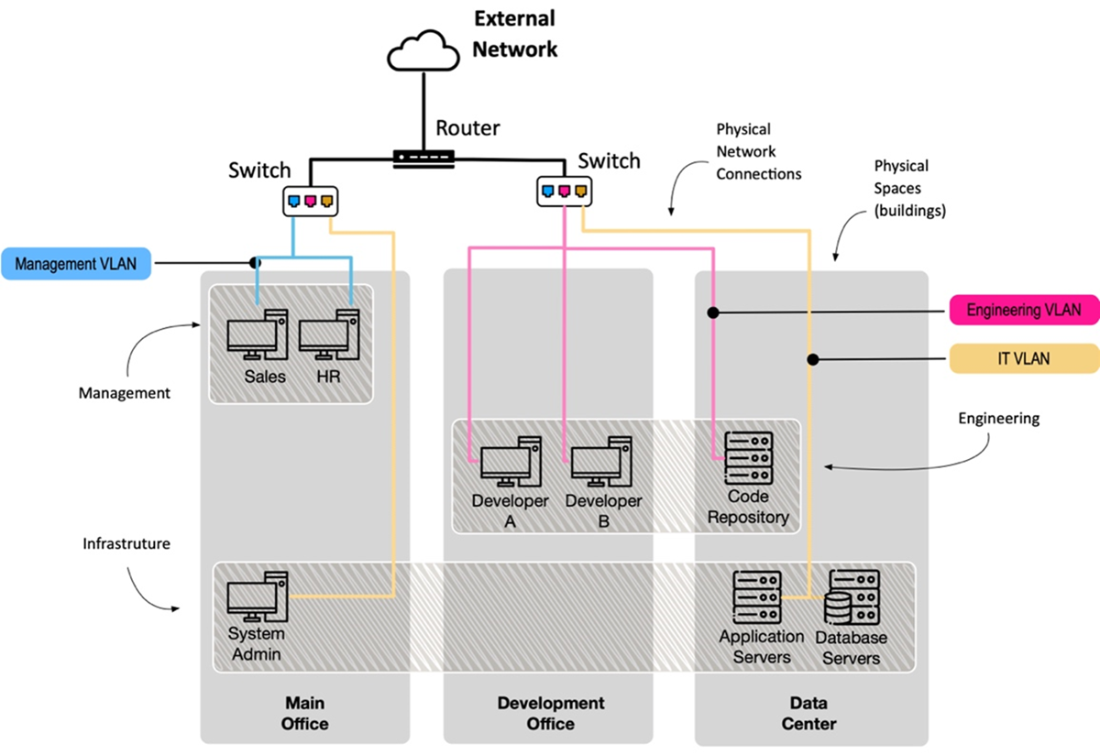
The topology diagram shows VLANs spanning distinct physical spaces, making the separation between physical location and logical grouping visible. section 11.8.2

