A baseline model is the reference forecasting model used to generate forecasts before review, comparison, or later improvement. It should support a defined business decision, use appropriate demand data, and prioritize usefulness rather than accuracy alone. section 1.3
Use a baseline model to:
- Generate most or all forecasts automatically, reducing manual workload. section 17.0
- Provide a consistent reference for evaluating forecast accuracy, bias, and process value. section 1.3 section 17.0
- Support review prioritization across short-, mid-, and long-term forecasting horizons. section 1.3
- Reduce exception-review effort by incorporating relevant demand drivers such as promotions, pricing, and marketing. section 17.0
Model selection is an iterative process. A limited dataset with few SKUs, little history, and no demand drivers may call for usual time-series models; broader data with demand drivers may support machine learning for more complex relationships. section 14.4 section 17.0
A practical comparison
Compare the baseline with a benchmark such as a moving average, then assess accuracy, bias, and value-weighted performance. A model that is accurate but uses the wrong granularity or demand data may still be less useful for planning decisions. section 1.3 section 17.0
Figure 14.11 The virtuous 4-steps model creation loop
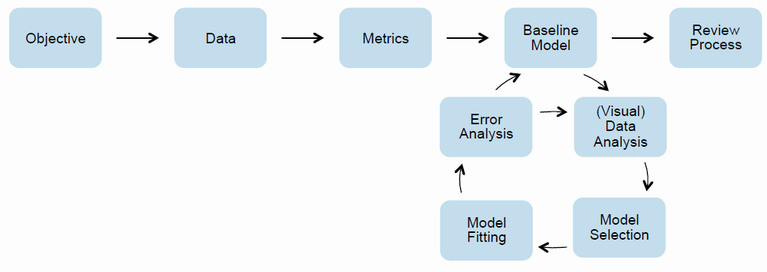
Use the model-creation loop to navigate the iterative steps involved in creating or selecting a baseline model. section 14.4















