A binary outcome is a target variable restricted to exactly two possible values. A practical coding scheme uses 0 and 1, such as whether a team missed or reached the postseason. section 20.4
Use a binary outcome when the analytical question asks whether something happened rather than how much happened. Logistic regression connects this outcome to one or more predictors, commonly continuous variables. section 20.4
Postseason qualification
Create an outcome equal to 0 for teams that failed to qualify and 1 for teams that qualified. Regress it against standardized offense and defense measures, then compare how well the models explain or predict qualification. The analysis found that defense and offense had roughly equal influence, with only negligible differences between models. section 20.4
Figure 20.4 In chapter 5, we developed linear regression and regression tree models to isolate hustle statistics that might have a statistically significant effect on wins and losses. From both model types, we discovered that points scored from screens, pass deflections on defense, and loose balls recovered matter more than other like statistics and do, in fact, contribute to wins and losses. In chapter 14, we developed ANOVA and logistic regression models to establish if defense matters more than offense in terms of regular season wins from the former and postseason qualification from the latter. Our models returned statistically significant results, but it wasn’t clear and unmistakable that defense matters more than offense.
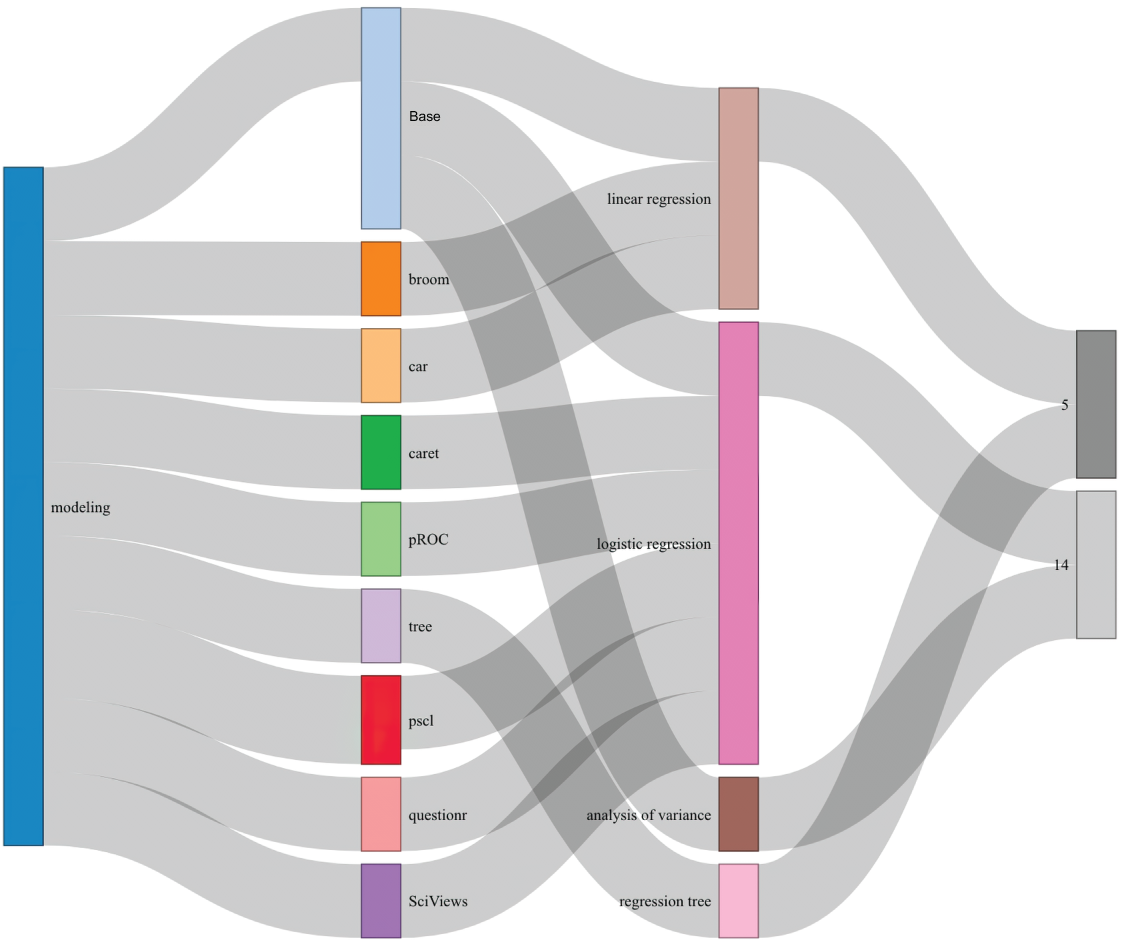
Trace how binary outcomes support logistic regression alongside ANOVA, linear regression, and regression trees in questions about wins and postseason qualification. section 20.4



