A business model represents how an organization creates, delivers, and captures value through its activities. Shared understanding of it helps teams make better decisions, prioritize effectively, and design software that supports company success. section 2.3.1
Use the Business Model Canvas to organize the model into four connected areas:
- Offerings: identify value propositions—the reasons customers choose the organization over competitors. section 2.3.1
- Customers: describe customers, communication relationships, and channels. section 2.3.1
- Infrastructure: capture key activities, resources, and partners required for success. section 2.3.1
- Finances: record the cost structure and main revenue streams. section 2.3.1
BigScreen’s “Anytime, Anywhere” campaign
Before tackling the monolithic ticketing system, the team examines the business motivation behind enabling mobile ticket purchases. A completed canvas captures the domain language and knowledge validated with domain experts. section 2.3.1
Figure 2.7 The four sections of the Business Model Canvas tool. This canvas gives us an understanding of what we offer, who we offer it to, what we need to do to succeed, and what finances we have.
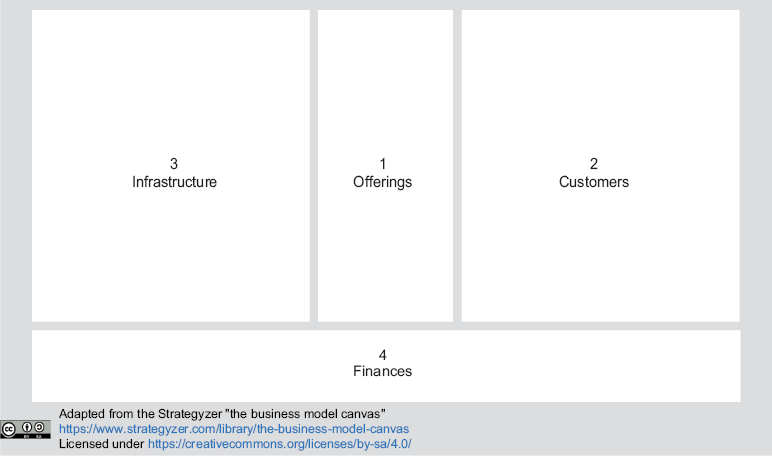
Browse the four-section canvas structure: offerings, customers, infrastructure, and finances. section 2.3.1


