A business model describes how a company generates revenue and achieves economic success. Understanding it connects accounting numbers to how a company operates, competes, and responds to its market. section 8.1.5 section 2.2.1
Analyze a business model by checking:
- Revenue structure, such as subscriptions or advertising, and the goal of increasing paying users. section 8.1.5
- Industry context, because sectors differ in regulation, economic sensitivity, costs, and the financial metrics that matter. section 2.2
- Defensibility, competition, cash generation, founder commitment, and the risk that technology or products become obsolete. section 4.6
- Scalability and operating requirements, including customers, hiring, MVP replication, capital intensity, and burn rate. section 12.1.2 section 12.3.3
Comparing business models
A supermarket chain and a technology company require different interpretations of their results. A successful technology product may visibly change annual results, while a supermarket's best-selling product may not appear as a comparable accounting event. Netflix and Spotify illustrate subscription- and advertising-based revenue models. section 2.2.1 section 8.1.5
Figure 2.5 All sectors with icons based on the GICS standard used in many financial platforms (Source: www.msci.com/our-solutions/indexes/gics)
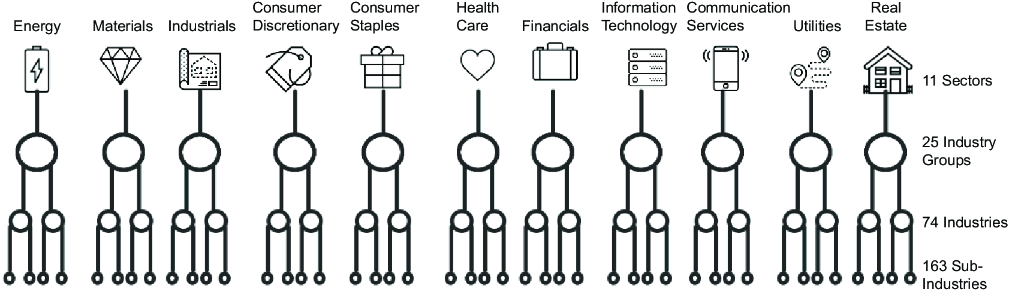
Use the GICS sector map to place a company in an industry context before selecting financial metrics or interpreting risks. section 2.2


