Canary deployment reduces release risk by keeping the old system live while sending a small portion of existing users to a new version. This makes production testing possible before a complete switch and simplifies rollback when problems appear. section 13.2
Search release
A search system may release its ranking model biweekly while changing the index, filter, and API on separate schedules. Canary deployment can expose the new ranking model to a small user group while the existing model continues serving everyone else. section 13.2
Use the pattern to:
- Run multiple production versions simultaneously. section 13.2
- Route only a limited portion of existing users to the new version. section 13.2
- Keep a fallback available and roll back more easily if the release fails. section 13.2 section 13.1.1
- Release ML and non-ML components independently when decomposition makes that practical. section 13.2 section 13.1.1
Do not equate canary deployment with A/B testing. A/B testing compares versions to evaluate performance; canary deployment tests a new version before switching users to it completely. section 13.2
Figure 13.4 Canary deployment
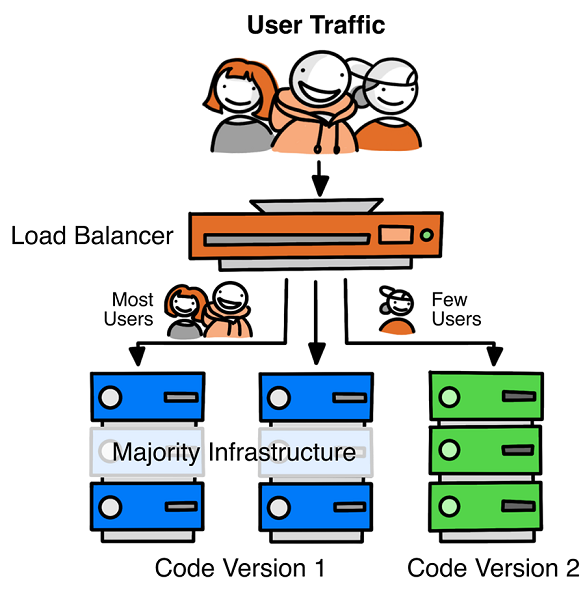
Use the deployment diagram to visualize granular traffic movement between the existing and new versions. section 13.2






