Capacity planning
Capacity planning is the process of estimating and preparing the resources needed to meet anticipated system workloads and demand.
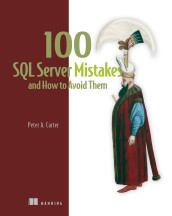
100 SQL Server Mistakes and How to Avoid Them
Capacity planning is the process of estimating and validating the computing resources required to meet a system's workload demands.
- How it is used
- Guides DBA-led resource forecasting before deployment, hardware refreshes, edition selection, and cluster failover planning.
- How deep it goes
- Defines future resource estimation and details growth, infrastructure, log, TempDB, headroom, monitoring, and DR-test considerations without prescribing a calculation method.
- Examples
- Uses MagicChoc and Historical Marketing Analysis to project daily ingestion from 200 GB files to 1.78 TB after one year.
- What you can do after
- Operate/configure infrastructure purchasing and database sizing decisions from projected workload growth and failover demand.
Read how 100 SQL Server Mistakes and How to Avoid Them explains capacity planning →
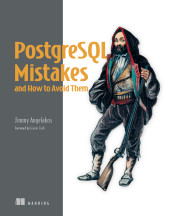
PostgreSQL Mistakes and How to Avoid Them
Capacity planning estimates future data and workload resource requirements to guide system sizing and structural decisions.
- How it is used
- Guides partitioning, scaling, and infrastructure decisions from projected data growth and workload trends.
- How deep it goes
- Works through ingestion and retention estimates, monthly range partitions, query-plan evidence, and long-term statistics; defers detailed infrastructure sizing.
- Examples
- Uses sensor measurements, retail-location growth, a 150-million-row payments table, monthly partitions, and pg_statviz snapshots.
- What you can do after
- Evaluate/understand projected growth to choose a partitioning approach and revise scaling plans using retained statistics.
Read how PostgreSQL Mistakes and How to Avoid Them explains capacity planning →
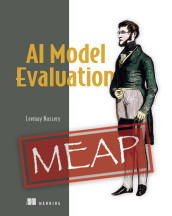
AI Model Evaluation
Capacity planning is the process of determining the computational resources required to operate a system under expected and peak workloads.
- How it is used
- Evaluates whether production infrastructure can serve models reliably, quickly, and cost-effectively under expected and peak workloads.
- How deep it goes
- Explains resource allocation, load testing, scaling choices, cost trade-offs, and infrastructure bottlenecks.
- Examples
- Uses shadow traffic to demonstrate duplicate computational load, stateful side effects, and supporting-infrastructure strain.
- What you can do after
- Evaluate infrastructure requirements, choose scaling strategies, and diagnose bottlenecks before production deployment.

Think Like a Software Engineering Manager
Capacity planning is the process of estimating the amount of work a team can complete during a period after accounting for constraints and non-delivery activities.
- How it is used
- Aligns planned commitments with the engineering capacity available during a quarter or sprint period.
- How deep it goes
- Includes feature sizing, capacity factors, overcommitment detection, and negotiation over deferred work.
- Examples
- Uses S/M/L feature sizing, a capacity-planning sheet, and a twelve-feature proposal exceeding capacity by 106 days.
- What you can do after
- Evaluate commitments, identify overcommitment, and negotiate realistic feature deferrals with cross-functional partners.
Read how Think Like a Software Engineering Manager explains capacity planning →
Also covered in
What to know first
- performancePerformance is a measure of how effectively a person, process, model, or system achieves its objectives, including qualities such as output quality, speed, and resource efficiency.
- costCost is the monetary expenditure or other resource burden incurred to acquire, produce, operate, or perform something.
- data lossData loss is the destruction, corruption, deletion, or unavailability of information that is expected to be retained or remain usable.
Related concepts
- planningkind of · Planning is the process of determining and organizing intended actions or steps toward a goal, often accounting for conditions or constraints.
- load testinguses · Load testing is the evaluation of a system’s behavior, performance, and capacity under specified or simulated workloads.
- simulationuses · Simulation is the modeled enactment of a system, process, or scenario under specified conditions to examine its behavior or possible outcomes.
- operational excellencepart of · Operational excellence is the disciplined ability to deliver and operate systems efficiently, predictably, reliably, and with continuous improvement.
- headroomuses · Headroom is the remaining unused capacity or budget available before a resource or performance limit is reached.
Questions about capacity planning
What is capacity planning?
Capacity planning is the process of estimating and preparing the resources needed to meet anticipated system workloads and demand.
Which Manning books explain capacity planning?
100 SQL Server Mistakes and How to Avoid Them, PostgreSQL Mistakes and How to Avoid Them, AI Model Evaluation and Think Like a Software Engineering Manager.
What should I know before learning capacity planning?
Manning books that teach capacity planning usually introduce performance, cost and data loss first.
What is capacity planning a kind of?
Capacity planning is a kind of planning. Planning is the process of determining and organizing intended actions or steps toward a goal, often accounting for conditions or constraints.
What is capacity planning part of?
Capacity planning is part of operational excellence. Operational excellence is the disciplined ability to deliver and operate systems efficiently, predictably, reliably, and with continuous improvement.
These guides are generated from the text of Manning books by Manning's knowledge graph and link to the sections they draw on. The full books are available on liveBook and at manning.com.