Claude
Claude is a family of large language models developed by Anthropic, along with the conversational AI assistants and services built around them.
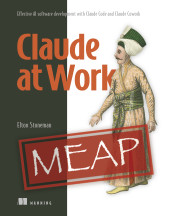
Claude at Work
Claude is Anthropic's AI assistant and family of large language models.
- How it is used
- Uses Claude as a collaborative assistant across software design, development, and operations.
- How deep it goes
- Explains conversational inputs, cloud execution, model choice, and error recovery, without detailing model internals.
- Examples
- Develops an architecture document from a rough sketch through prompts, technology discussion, and revision.
- What you can do after
- Apply it via Claude to develop and review a software design through iterative conversation.
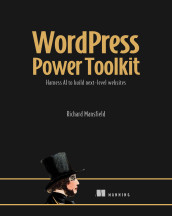
WordPress Power Toolkit: Harness AI to build next-level websites
Claude.ai is a web-based platform that provides access to Anthropic's Claude artificial intelligence assistant.
- How it is used
- Supports website planning, prompt improvement, writing revision, and HTML generation.
- How deep it goes
- Provides interface steps and worked prompts for planning and HTML refinement, without explaining Claude’s underlying model.
- Examples
- Uses a bass-fishing website consultation, an HTML lakes table, a prose-revision prompt, and a failed translation attempt.
- What you can do after
- Apply it via claude.ai or Anthropic’s console to request planning suggestions, develop prompts, and refine HTML for a WordPress page.
Read how WordPress Power Toolkit: Harness AI to build next-level websites explains Claude →
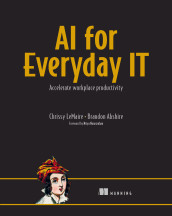
AI for Everyday IT
An AI assistant developed by Anthropic that generates conversational responses and other content from user prompts.
- How it is used
- Supports long-document analysis and professional or technical writing as a conversational AI assistant.
- How deep it goes
- Describes writing styles and practical uses without explaining model internals.
- Examples
- Illustrates use with a technical requirements summary, microservices specifications, and authentication-system documentation.
- What you can do after
- Apply it via Claude to draft summaries and documentation using an appropriate writing style.
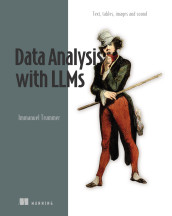
Data Analysis with LLMs
Claude 3.5 is a version of Anthropic's Claude family of large language models.
- How it is used
- Positions Claude as an Anthropic alternative for conversational tasks, model comparison, and Python-based language-model applications.
- How deep it goes
- Introduces Claude’s provider, training distinction, web access, and Python call structure without exploring model internals.
- Examples
- Uses web chat, sentiment classification, SQL translation, and a Python script that answers questions.
- What you can do after
- Operate Claude through Anthropic’s web interface or Python library using an access key, model name, messages, and token limit.
Also covered in
What to know first
- GPT-4GPT-4 is a multimodal large language model developed by OpenAI that processes text and image inputs and generates text.
- language modelA language model is a computational model that represents patterns in linguistic sequences to assign probabilities, predict, generate, or evaluate language.
- contractA contract is an agreed specification of the conditions, expectations, rights, or obligations that govern behavior or interactions between parties or software components.
- artificial intelligenceArtificial intelligence is the field of computing concerned with creating systems that perform tasks associated with intelligence, such as learning, reasoning, perception, and decision-making.
Related concepts
- language modelkind of · A language model is a computational model that represents patterns in linguistic sequences to assign probabilities, predict, generate, or evaluate language.
- conversational aikind of · Conversational AI is artificial intelligence that enables software systems to interpret user input and interact with users through natural-language dialogue.
- ai servicekind of · An AI service is a software service that provides or orchestrates artificial intelligence capabilities through an interface or endpoint.
- ChatGPTcontrasts with · ChatGPT is OpenAI’s conversational AI service, which lets users interact with generative AI models and related tools through natural-language prompts.
Questions about Claude
What is Claude?
Claude is a family of large language models developed by Anthropic, along with the conversational AI assistants and services built around them.
Which Manning books explain Claude?
Claude at Work, WordPress Power Toolkit: Harness AI to build next-level websites, AI for Everyday IT and Data Analysis with LLMs.
What should I know before learning Claude?
Manning books that teach Claude usually introduce GPT-4, language model, contract and artificial intelligence first.
What is the difference between Claude and ChatGPT?
Claude is a family of large language models developed by Anthropic, along with the conversational AI assistants and services built around them. ChatGPT is OpenAI’s conversational AI service, which lets users interact with generative AI models and related tools through natural-language prompts.
What is Claude a kind of?
Claude is a kind of language model. A language model is a computational model that represents patterns in linguistic sequences to assign probabilities, predict, generate, or evaluate language.
These guides are generated from the text of Manning books by Manning's knowledge graph and link to the sections they draw on. The full books are available on liveBook and at manning.com.