A cognitive bias is a systematic pattern of deviation from a norm that affects judgment and decision-making. It often acts as a mental shortcut: the mind simplifies information, draws on experience, and reaches a workable decision quickly. That efficiency matters when a group must make many small choices while modeling, but the same shortcut can steer attention, behavior, and design decisions in unhelpful directions. section 7.1 section 7.1.1
Treat bias as a predictable group dynamic rather than proof that people are irrational. Because patterns recur, a facilitator can notice them, name their possible effect, and let the group decide whether to challenge or use them. The aim is balance: fast judgment is valuable unless the cost of a mistaken decision is high. section 7.1 section 7.1.4
Anchoring a pivotal event
During EventStorming, a high-ranking participant labels one domain event pivotal. Others may accept it or suggest only nearby alternatives. The first proposal becomes an anchor, while rank can make people less willing to voice an independent view. Pause to surface the anchor and invite perspectives that do not start from it. section 7.1.2 section 1.3.3
Use cognitive bias constructively in collaborative modeling:
- Watch decisions that shape the board: selected events, subgroup splits, timeline placement, level of detail, starting point, and when discussion ends. section 7.1
- Make a complex conversation visible. A template or live sketch can reduce the effects of availability bias, anchoring effect, and confirmation bias by giving the group a shared artifact to inspect. section 7.3.2
- Offer nudges as optional prompts, not hidden control. Ask agreement when appropriate, and keep it easy for the group to decline the template or visualization. section 7.3.2
- Examine the facilitator’s own assumptions and reactions. Unacknowledged prejudices can reduce neutrality and discourage participants from speaking up. section 5.2.1
Figure 7.1 Sensemaking exercise to demonstrate cognitive bias during collaborative modeling
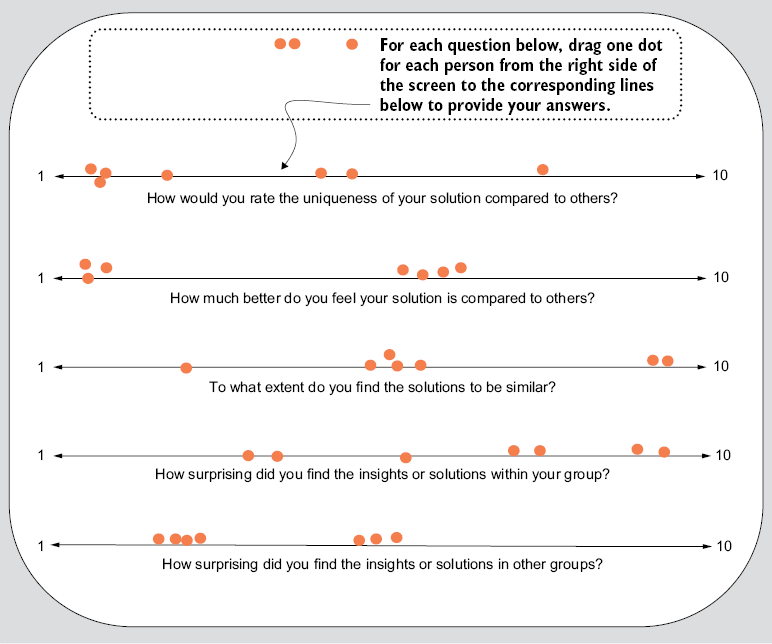
Compare subgroup outputs through a shared sensemaking exercise to make recurring patterns of judgment visible before deciding how to respond. section 7.1.2
Bias can affect long-lived software architecture choices as well as workshop behavior. Appeals to a favored talk, authority, post, or technology can feel persuasive without adequately testing the decision. Surface the influence, visualize alternatives, and preserve the group’s choice about what to do next. section 7.2 section 7.3.2


