Cognitive bias is an unintentional distortion in human judgment that can make a demand forecast less accurate. Judgment adds information that a model may not possess, but it can also turn a forecast into something other than an unbiased estimate of unconstrained future demand, such as a sales target, budget, or supply plan. Recognizing these distortions is a practical first step toward limiting their effect. section 16.2 section 16.2.1
Figure 16.2 Sources of judgmental biases
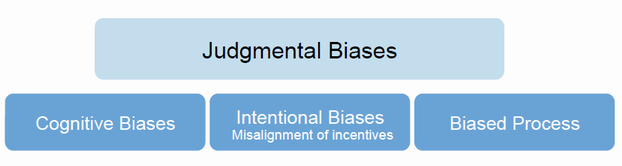
Use this map to distinguish cognitive biases from intentional biases caused by incentives and from bias introduced by the forecasting process itself. section 16.2
Cognitive biases are deeply embedded in reasoning and can make people consistently poor forecasters. Awareness does not eliminate them, but it helps teams design reviews that do not rely on a single person’s first impression, preferred evidence, or perceived pattern. section 16.2.1 section 16.4
Common distortions in demand-planning judgment include:
- Anchoring bias: the first number considered influences later estimates, even when it is unrelated. A colleague opening a meeting with “20% more than last quarter” can anchor the discussion. section 16.2.1
- Confirmation bias: people unconsciously seek and emphasize evidence that supports an existing belief while requiring more evidence for contradictory information. section 16.2.1
- Apophenia: people perceive patterns or relationships between unrelated events and may mistake them for useful demand signals. section 16.4
- Need to act: planners may make many minor forecast adjustments even when the changes fall within the error margin and add little value. section 12.2.3
- Optimism in adjustments: positive edits can lead to overforecasting; tracking positive and negative adjustments separately can expose this directional tendency. section 12.2.3
Challenge the first number, not just the final forecast
A team expects a strong next month after hearing a positive client reaction to a product launch. The early optimistic estimate can anchor the meeting, while the team gives extra attention to favorable evidence. Instead of debating only the ending number, have participants work independently, state their assumptions and expected impacts, and compare the evidence behind competing views. section 16.2.1 section 16.4
Bias reduction is a process design task. Align objectives so that no participant benefits from skewing demand, bring together people with different mindsets and information sources, and preserve independence before discussion. Review assumptions rather than only end numbers, and use forecast value added (FVA) to learn whether adjustments improve results. Focus attention on significant edits and on the items where review is most likely to add value. section 12.2.3 section 16.4 section 17.0


