A training completion rate is the percentage of designated participants who finish a specified program. For cybersecurity awareness training, it shows how much of the intended workforce has completed training—not whether their behavior has changed. section 5.2.4 section 6.4.1
Track completion during onboarding and annually afterward. If the rate falls below 100%, identify who still needs mandatory training and close the gap. section 6.4.1 section 6.5
Reading a training dashboard
An organizational dashboard moves from 75% cybersecurity awareness training completion to 100% after training-program improvements. Report that progress, but check post-training assessments, phishing reports, and policy violations before concluding that employees are better prepared to respond to threats. section 5.2.4
Figure 5.4 The left side shows TechGuard Solutions’ organizational metrics dashboard before the focus on training and budget increases. Testing percentages show the overall pass rate from testing. The cybersecurity budget is the total cyber budget as a percentage of the total IT budget. Cybersecurity budgets are most often a percentage of the overall IT budget. The right side shows the organizational metrics dashboard after 3 years and the implementation of strategic training program improvements.
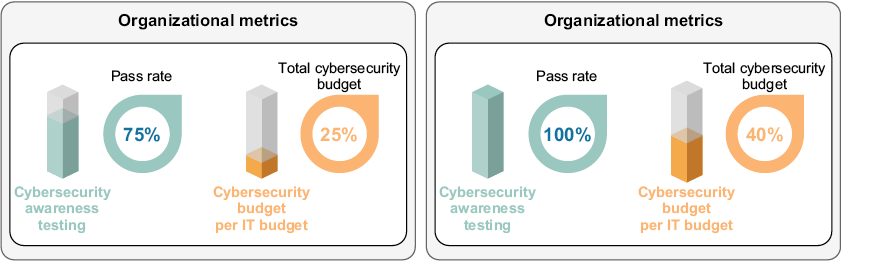
Compare the before-and-after organizational dashboards to see training completion alongside the cybersecurity budget rather than treating either percentage as a complete measure of security posture. section 5.2.4

