Cybersecurity compliance means meeting applicable security requirements, whether they come from regulations, standards, frameworks, or internal policies. Metrics make that adherence visible: they provide records for audits and regulatory reviews while helping leaders identify gaps that need resources or process changes. A compliance percentage is useful only when its requirement, scope, and remaining gap are clear. section 1.2 section 1.5.1
Track compliance at the level where someone can act on it:
- Control coverage: measure whether required protections are in place. An 85% data-encryption compliance rate points to data still needing protection; full coverage is the stated next-quarter goal. section 4.2.5
- Policy upkeep: compare completed document reviews, compliant documentation, and employee violations with separate targets. These measures reveal different problems rather than one overall score. section 5.5.2
- Third-party adherence: distinguish vendors meeting security standards from completed annual reviews and vendors found compliant during audits. section 5.7.3
Turn a dashboard gap into a decision
After an audit exposed outdated policies and inconsistent adherence, a healthcare software provider set targets of 100% annual document reviews and at least 90% documentation compliance. Its dashboard later showed 98% of reviews complete but only 75% documentation compliance. The next action is not to celebrate the review rate alone: finish the remaining reviews and investigate why documentation still misses its target. section 5.5.2
Figure 5.8 The left side shows an example policy and procedure dashboard for MediHealth Solutions depicting the need for policy and procedure improvements. On the right is the dashboard for MediHealth Solutions after implementing a formal document control process to update policies and procedures periodically.
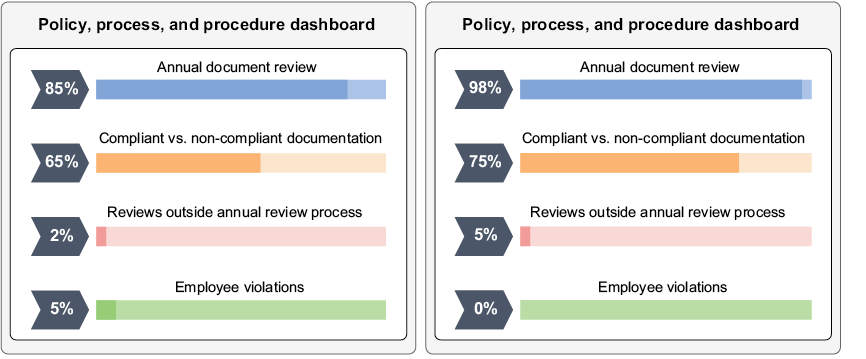
Compare the policy-and-procedure dashboard before and after formal document control; look for improvements alongside gaps that remain. section 5.5.2
Match the report to the decision-maker. A CEO needs a concise account of business risk and regulatory compliance; a CISO needs control status and actions. An executive report can place HIPAA, PCI DSS, and GDPR percentages beside other security indicators, but it should still state what needs attention. Framework certification is a different claim: HITRUST requires a validated assessment against prescribed controls and practices. section 4.2.5 section 4.3.1 section 1.5.1
Treat automated compliance analysis as decision support, not a final judgment. When AI handles sensitive security data, protect it with anonymization, secure storage, and access controls; have people validate consequential outputs and interpret legal or business implications. section 13.10











