Compliance means adhering to applicable laws, regulations, policies, standards, and organizational requirements. In AI products, it connects governance decisions with privacy, fairness, security, and user trust. section 11.0 section 12.2.4
Treat compliance as a continuous product responsibility rather than a final approval step. Teams must account for changing regulations, cross-border data flows, provider commitments, bias risks, and possible incidents. section 11.2.1 section 11.0
Practical compliance controls for commercial LLM use include:
- Document training data and preprocessing routines. section 11.2.1
- Encrypt data in transit and at rest, and restrict model access to authorized users. section 11.2.1
- Audit providers, verify jurisdictional compliance, and monitor privacy risks after launch. section 11.2.1
- Detect bias, flag limited or unbalanced data, and communicate safeguards in clear language. section 12.2.4
Explaining compliance to stakeholders
A product manager describes anonymized customer order data, excludes personally identifiable information, explains bias checks, and acknowledges limitations. This transparent approach addresses legal and compliance concerns while building internal trust. section 12.2.4
Figure 11.5 Major privacy concerns in an AI system
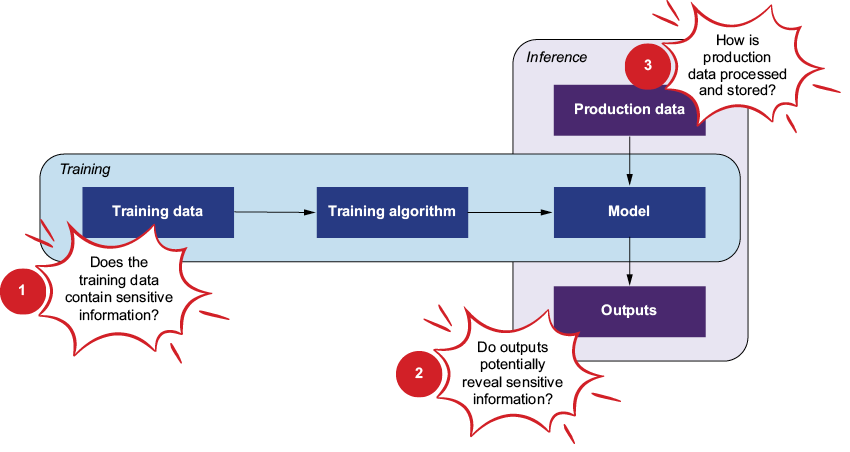
Use the privacy-concerns figure to map compliance risks across an AI system. section 11.2.1











