Confidence is trust in your abilities and judgment that helps you speak clearly, make decisions, and lead others. A lead developer’s confidence can help a team trust their guidance. It does not require knowing every answer: you can be assured in what you know and honest about what you need to check. section 10.1.1 section 3.3.3
Speaking confidently often means removing an unnecessary apology, not overstating certainty. Instead of “I might be wrong, but shouldn’t we use the latest version of the framework?”, try “I think we should use the latest version of the framework.” Then stay open to evidence and other people’s ideas. Confidence and humility work together. section 10.1.1 section 6.2.3
When a decision is overdue
A lead developer presented several options for a late project but spent weeks studying them before choosing the first one—the established approach they had already recognized. The lesson is not to skip analysis. It is to notice when further comparison is delaying a decision you have enough experience to make. section 10.1.1
Build confidence through actions you can repeat:
- Set achievable goals, break them into milestones, and notice your progress. Treat setbacks as chances to examine what happened and what support was missing. section 10.4
- Focus on your own strengths and progress rather than someone else’s curated achievements. Seek supportive colleagues, mentors, or developer communities. section 10.4.2
- For a presentation, prepare early, ask what the audience knows, and adjust your explanation. If you cannot answer a question, promise to research it and follow up. section 3.4.2 section 3.3.3
- With a difficult client, pause and assess their concern before responding. If you need time to verify an answer, say so rather than giving inaccurate information. section 8.4.1
Self-doubt can keep you willing to learn, but persistent comparison or fear of failure can hold you back. Recognize what you have accomplished, accept constructive feedback, and take on manageable challenges. Confidence grows through practice, not a claim to be perfect. section 10.4 section 11.5
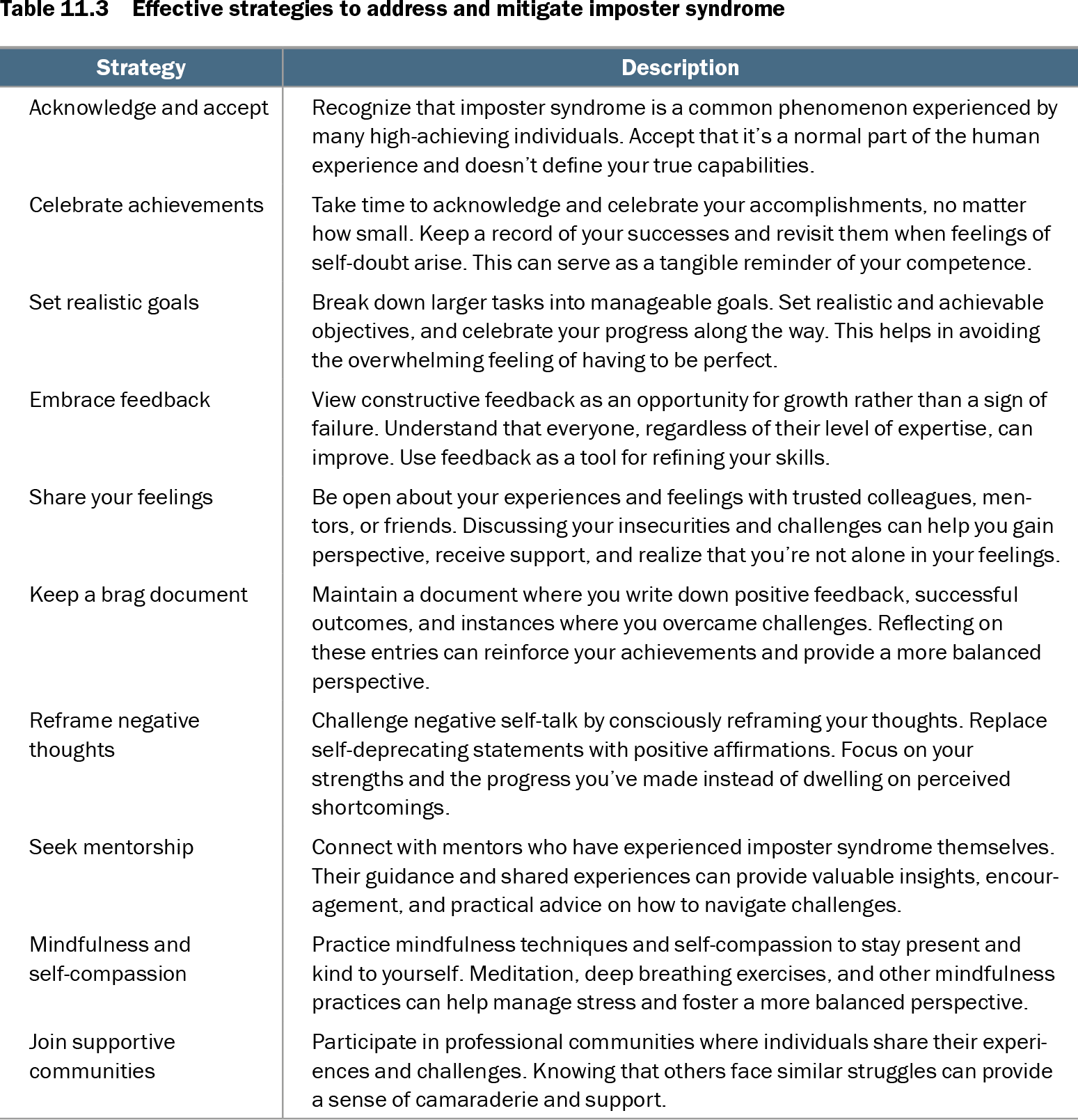
Table 11.3 Effective strategies to address and mitigate imposter syndrome (view table figure)
| Strategy |
Description |
|---|---|
| Acknowledge and accept |
Recognize that imposter syndrome is a common phenomenon experienced by many high-achieving individuals. Accept that it’s a normal part of the human experience and doesn’t define your true capabilities. |
| Celebrate achievements |
Take time to acknowledge and celebrate your accomplishments, no matter how small. Keep a record of your successes and revisit them when feelings of self-doubt arise. This can serve as a tangible reminder of your competence. |
| Set realistic goals |
Break down larger tasks into manageable goals. Set realistic and achievable objectives, and celebrate your progress along the way. This helps in avoiding the overwhelming feeling of having to be perfect. |
| Embrace feedback |
View constructive feedback as an opportunity for growth rather than a sign of failure. Understand that everyone, regardless of their level of expertise, can improve. Use feedback as a tool for refining your skills. |
| Share your feelings |
Be open about your experiences and feelings with trusted colleagues, mentors, or friends. Discussing your insecurities and challenges can help you gain perspective, receive support, and realize that you’re not alone in your feelings. |
| Keep a brag document |
Maintain a document where you write down positive feedback, successful outcomes, and instances where you overcame challenges. Reflecting on these entries can reinforce your achievements and provide a more balanced perspective. |
| Reframe negative thoughts |
Challenge negative self-talk by consciously reframing your thoughts. Replace self-deprecating statements with positive affirmations. Focus on your strengths and the progress you’ve made instead of dwelling on perceived shortcomings. |
| Seek mentorship |
Connect with mentors who have experienced imposter syndrome themselves. Their guidance and shared experiences can provide valuable insights, encouragement, and practical advice on how to navigate challenges. |
| Mindfulness and self-compassion |
Practice mindfulness techniques and self-compassion to stay present and kind to yourself. Meditation, deep breathing exercises, and other mindfulness practices can help manage stress and foster a more balanced perspective. |
| Join supportive communities |
Participate in professional communities where individuals share their experiences and challenges. Knowing that others face similar struggles can provide a sense of camaraderie and support. |
Use the strategy table to choose a response to imposter syndrome, such as recording achievements, setting realistic goals, or embracing feedback. section 11.5