In an agentic interaction, context is the situational information that shapes how an intent is interpreted. It is part of a conversational contract alongside intent, constraints, authority, outcome, and evidence. Context helps determine what a request means; constraints and authority bound what the agent may do. section 6.2.2
A quality investigation
An agent asked to assess whether lot 2418 requires containment needs the circumstances of that investigation, not just a command to query production history. A bounded interaction can authorize it to assemble an evidence package, retrieve specified records, and propose a recommendation within an approved operating envelope. Actions beyond delegated authority require escalation. section 6.2.2
Figure 6.2 Anatomy of a conversational contract. A conversational contract carries an agentic interaction from intent toward outcome. Context shapes how the intent is interpreted, constraints and authority define the boundary within which the agent may act, and the evidence obligation defines what must remain after the agent has acted.
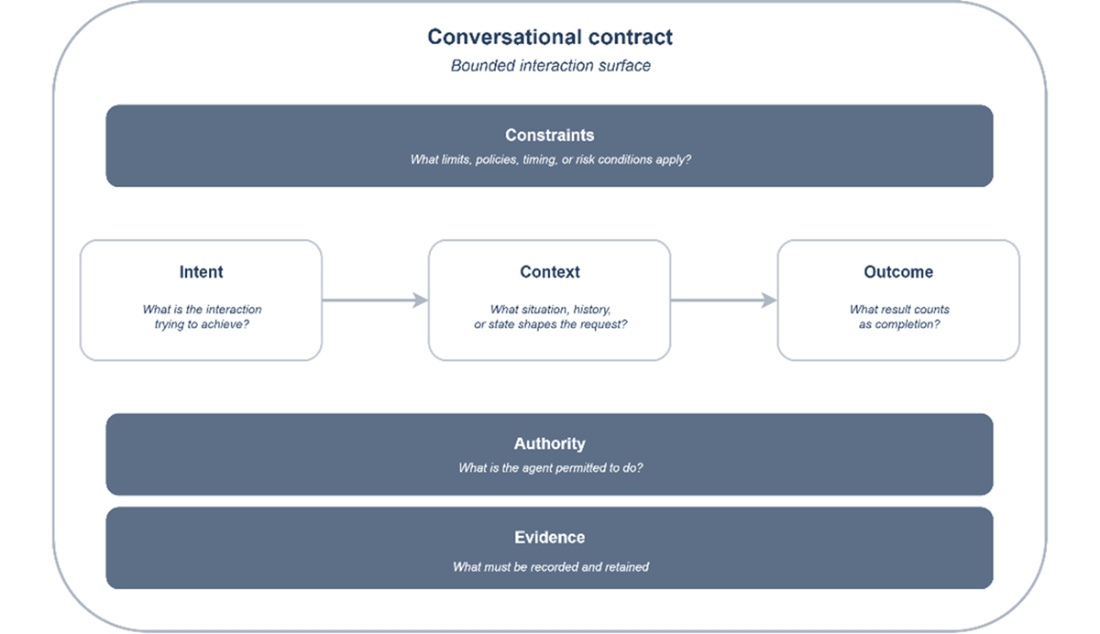
The contract diagram shows how context shapes intent while constraints and authority bound action. section 6.2.2
Decision context should travel with coordination and handoffs. Event streams should preserve the originating interaction, the authority or constraint that shaped it, and the next accountable participant. A reviewer’s handoff payload should include relevant facts, assumptions, constraints, operating envelope, risk classification, material uncertainty, and dependencies, alongside the evidence and pending action. section 6.4.2 section 6.6.3
A handoff also needs a structured return path. For example, a quality manager may approve, reject, or modify a containment recommendation, request more evidence, or escalate it. Each outcome should map to a defined workflow transition, event, or case state so the flow can resume safely when appropriate. section 6.6.3