A conversation is a cumulative session: every prompt and response adds to its context. Tool use, such as searching the web and loading pages, can add thousands of tokens in a turn. section 1.4.1
Each new chat starts with a clean slate. Supply relevant context rather than assuming it carries over; manage sessions by renaming chats, favoriting them, returning to old ones, requesting summaries, or exporting transcripts. section 1.4.1 section 2.9
Use a deliberate workflow to keep the exchange useful:
- Open with a goal, context, constraints, and desired format. section 2.9
- Evaluate responses, iterate on gaps, and push back with evidence when something is wrong. section 2.9
- If a thread becomes confused, start a fresh session with a stronger opening prompt. section 2.9
Opening prompt template
Goal: [task]. Context: [relevant facts]. Constraints: [limits]. Format: [desired output]. section 2.9
Figure 1.2 How context builds over the turns of a conversation. The input grows cumulatively and there can be huge jumps from tool use when Claude is researching file content or web pages.
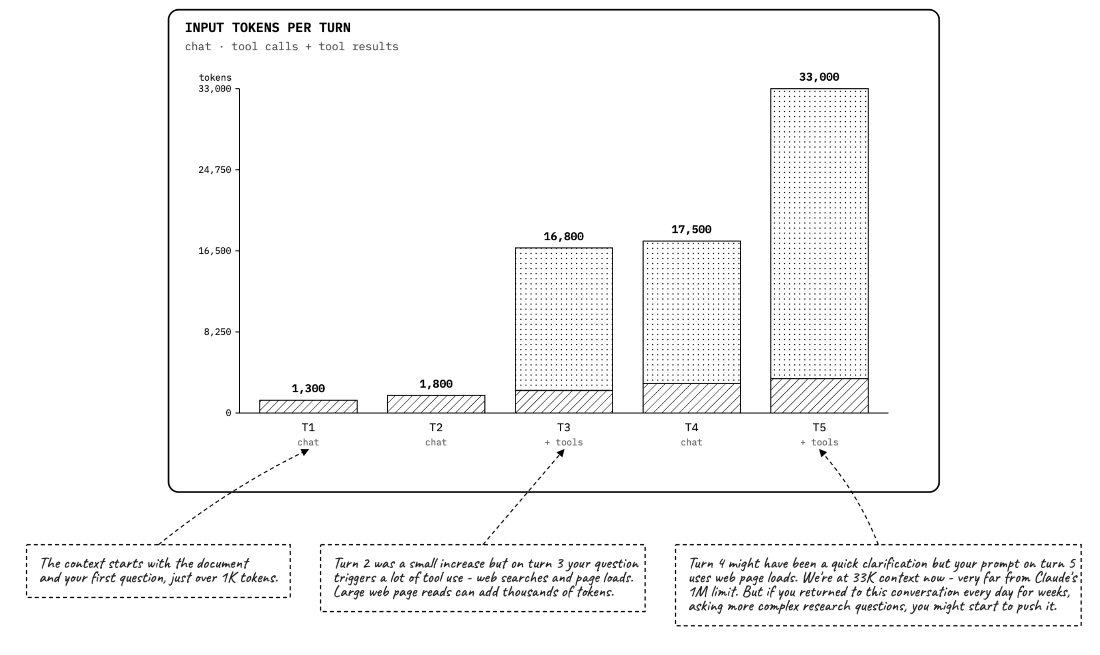
The diagram shows context accumulating across turns, with large jumps when tools load research or file content. section 1.4.1