Data is information arranged so a computer can store, process, analyze, or transmit it. Programs may receive data from variables, users, or files; a file becomes especially useful when people have too much information to enter one item at a time. section 23.0 section 12.1
A practical data workflow is:
- Read structured information from a file, usually as lines of text. section 23.0 section 23.6
- Store the values in variables so later steps can use them. section 23.0 section 12.1
- Clean and analyze the stored values, such as finding averages, maximums, minimums, duplicates, or unique categories. section 23.0 section 23.6
Friends' contact data
A program can read friends' names and phone numbers from a file, remove unnecessary characters from the numbers, identify their area codes, and determine which states are represented. The same pattern applies to exported spreadsheets or downloaded weather and election data. section 23.0 section 23.6
Figure 12.1. Drawing the inputs to the program, a sample mashup of the input names, and the output shown to the user
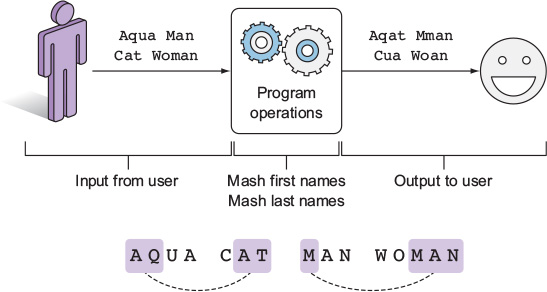
A visual input-to-output diagram helps connect entered names, stored pieces of information, and the program's resulting mashup. section 12.1







