Data integration combines structured, semistructured, and unstructured sources into a coherent knowledge graph. Reliable integration preserves accuracy, consistency, identifiers, context, and domain meaning. section 1.5.1 section 4.0
A practical integration pipeline typically:
- Transforms CSV files, relational databases, APIs, and other schemas into a homogeneous graph. section 4.0
- Reconciles names and identifiers, then merges entities and relationships during post-processing. section 4.0
- Adds typed relationships, ontologies, and inferred links so graph structure reflects domain meaning. section 1.5.1
Biomedical integration
A clinical knowledge graph can merge electronic health records with genomics, proteomics, transcriptomics, ontologies, and publications. Patient, drug, and disease nodes then support precision-medicine analysis while privacy, missing information, and heterogeneous data remain operational constraints. section 4.4
Figure 4.12 A single patient’s clinical oncology journey (courtesy of David Hughes; https://www.graphable.ai/blog/patient-journey-mapping)
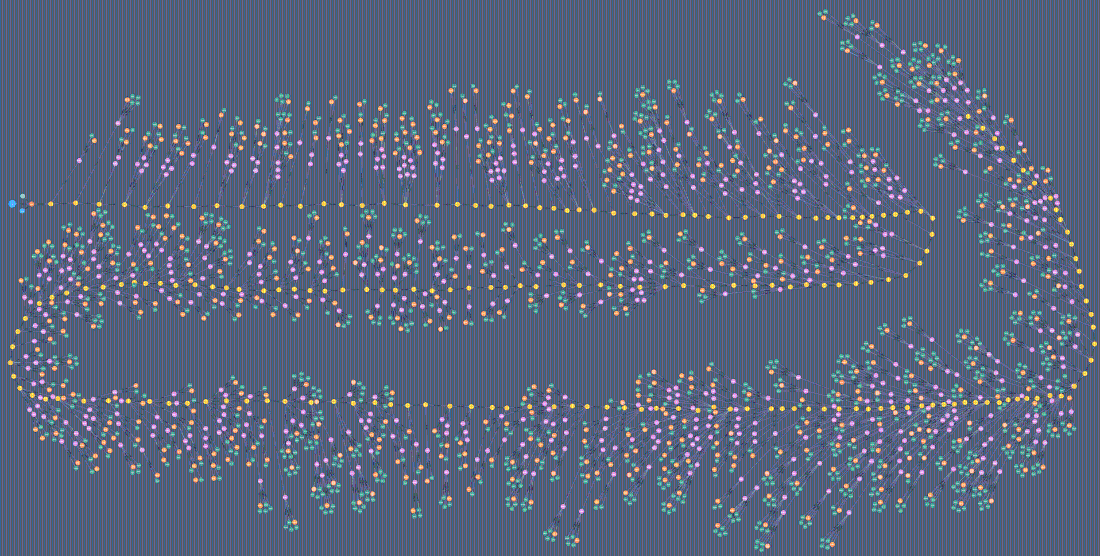
Trace how integrated clinical data can represent a patient journey across complex care, complementing clinical pathways. section 4.4




