liveBook · Manning

Data integration

As explained in The Art of AI Product Development

Data integration is the combining and coordinating of data from multiple sources, formats, or repositories so it can be processed consistently.

Data integration combines and coordinates information from multiple sources so an AI system can process it consistently. In established products, data may be scattered across databases, stored in incompatible formats, or need substantial cleanup before producing value. Integration therefore includes practical work on governance and infrastructure, not just connecting systems. section 2.1.4

For language-model applications, integration connects custom organizational knowledge—such as wikis, knowledge bases, and internal documents—to generated responses. Retrieval-augmented generation retrieves relevant, current information and supplies it as context, reducing generic or outdated output and helping users trust the result. section 7.0

From scattered knowledge to useful answers

An analytics product may need to combine information across existing repositories before adding AI. A language-model application can then retrieve relevant material from wikis and internal documents instead of relying only on prompts, making responses more specific to the organization. section 2.1.4 section 7.0
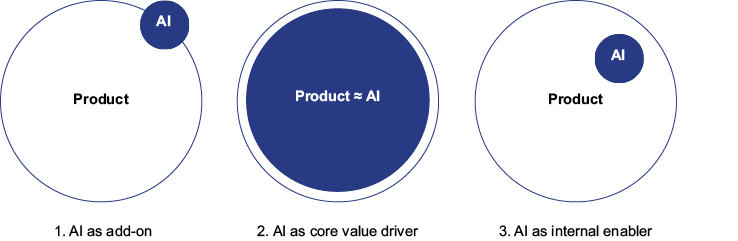
Figure 2.6 Three scenarios for AI integration
A blue circle with white text

AI-generated content may be incorrect.

Use the scenario map to distinguish how integration work changes between established products, new AI efforts, and other organizational contexts. section 2.1.4


How The Art of AI Product Development covers it

How deep it goes
Covers scattered data, format differences, cleanup, governance, infrastructure, and retrieval-augmented generation, but not implementation code.
Examples
Uses legacy analytics platforms, sustainability reporting, wikis, knowledge bases, internal documents, and custom language-model applications.
What it assumes
Assumes existing repositories, domain expertise, and an AI product context, while treating cleanup and governance as explicit work.
What you can do after
Apply it via retrieval-augmented generation to produce more relevant, current, and context-aware language-model responses.
How it connects
Connects data governance, AI integration, retrieval-augmented generation, semantic search, language models, and fine-tuning.

Also explained in

Compare how 5 books explain data integration →

Related concepts

This explainer was generated by Manning's knowledge graph from the text of The Art of AI Product Development. The section links point to the parts of the book it draws on.


