Data integrity is the security property that systems and data remain trustworthy and are not altered during storage or transmission except by authorized entities. It is one element of the CIA triad, alongside confidentiality and availability. section 11.1.1 section 11.6
Apply integrity as an operational security check:
- Distinguish integrity from confidentiality: encryption can prevent reading a message but cannot by itself guarantee that the message was not altered. section 20.1.1
- Recognize bit-flipping attacks, which modify ciphertext bits to cause predictable changes in plaintext without decrypting the message. section 20.1.1
- Treat integrity as a distinct CIA objective: attacks can target unauthorized alteration even when confidentiality or availability is unaffected. section 11.1.1 section 11.6
Wireless message alteration
An attacker flips bits in encrypted wireless ciphertext. Even without reading the message, the attacker can create predictable changes in the decrypted plaintext. Appending a checksum before encryption and transmission helps protect the message's integrity. section 20.1.1
Figure 11.1 The CIA triad. Confidentiality protects systems and data from unauthorized access, integrity ensures that systems and data are trustworthy, and availability ensures that systems and data remain available to authorized users.
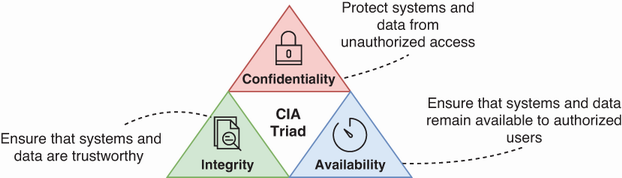
Use the CIA triad figure to compare integrity with confidentiality and availability. section 11.1.1

















