liveBook · Manning

Data integrity

As explained in Data Without Labels

Data integrity is the preservation of accurate and consistent relationships among related tables, variables, and entities.

Data integrity preserves accurate, consistent relationships among linked tables, variables, and entities. It matters when records are captured, loaded, transformed, or shared across systems. section 1.2.3

Employee records across tables

An employee’s details may be distributed across multiple tables connected by employee ID. Data integrity requires those relationships and entity details to remain consistent. section 1.2.3

Check integrity alongside broader data-quality problems:

  • Compare values reported by different systems, such as conflicting revenue figures, and seek business guidance when discrepancies remain. section 1.2.3
  • Inspect for nulls, blanks, invalid characters, incorrect types, duplicates, and outliers that can degrade downstream analysis. section 1.2.3
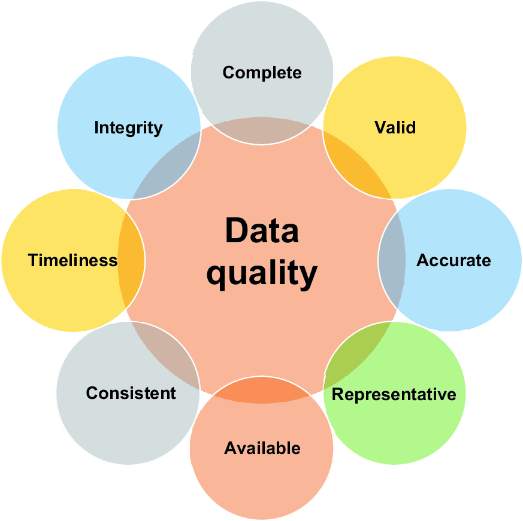
Figure 1.5 Data quality is of paramount importance; attributes of good-quality data are shown.
figure

Use the data-quality figure to situate integrity among the attributes of usable data. section 1.2.3


How Data Without Labels covers it

How deep it goes
Defines relational consistency and illustrates it with employee tables, but stops short of specifying validation code or procedural checks.
Examples
Uses employee IDs across linked tables and conflicting revenue figures across systems as concrete integrity cases.
What you can do after
Evaluate whether related tables, entities, and cross-system values remain consistent before analysis.
How it connects
Connects data integrity with data quality, consistency, completeness, timeliness, missing data, duplicates, and outliers.

Also explained in

Compare how 18 books explain data integrity →

Related concepts

This explainer was generated by Manning's knowledge graph from the text of Data Without Labels. The section links point to the parts of the book it draws on.















