In digital identity, data integrity means preserving confidence that an interaction still involves the same authorized entity that established the relationship. This relationship integrity is the trust foundation beneath account access, service delivery, and authorization decisions. section 2.3.2 section 3.2
Authentication maintains that confidence by verifying the current entity against the account relationship. Enrollment creates the account, while recovery, updates, propagation, and termination must keep its credentials and attributes aligned with reality. A weak process at any point can cause a system to recognize or continue trusting the wrong requester. section 3.10 section 3.9
Relationship integrity has several security consequences:
- Authorization is only as reliable as authentication: correctly enforced policies can still grant access to an attacker using a misrepresented identity. section 2.3.2 section 3.9
- Both sides of a relationship matter. A user must authenticate to a system, and the system must prove it is the legitimate service rather than an impersonator. section 3.2
- Authentication requires technical controls as well as governance and operational processes; phishing and credential resets can defeat otherwise sound cryptography. section 3.0
- Stronger methods can combine factors or use challenge-response techniques to resist phishing, credential stuffing, replay, and session hijacking. section 3.10
Compromised employee credentials
Attackers who persuaded support staff to reset employee credentials gained access to internal administrative tools and then took over trusted public accounts. The immediate failure was authentication, but the damage spread because downstream systems treated the attackers as legitimate employees and applied valid access decisions to a false identity. section 3.0 section 3.9
Protecting relationship integrity therefore means designing identity systems around the entire account life cycle, not merely a login screen. Authentication must establish who is interacting, preserve that confidence over time, and provide dependable identity context before authorization determines what that entity may do. section 3.10 section 3.9
Figure 3.2 The cascade of consequences triggered by a loss of relationship integrity. Compromised internal authentication undermines the trusted relationship between administrators and the system, leading to a broader loss of integrity for verified accounts. As confidence diminishes, individuals are deceived, which can result in financial loss, account lockouts, and reduced trust in the platform.
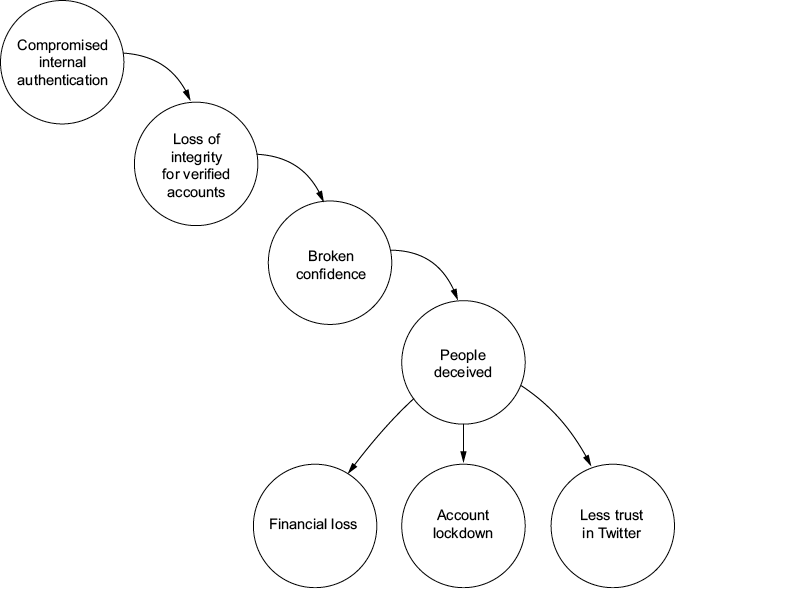
This diagram traces how compromised internal authentication can cascade into account deception, financial loss, lockouts, and reduced platform trust. section 3.2

















