A data model organizes a dataset for analysis by specifying its domain structure, schema, and usable instances. In graph workflows, it determines how entities and relationships become nodes, edges, and properties. section 8.2 section 8.3.1
Build and validate a model through a short practical pipeline:
- Understand the domain, use case, relationships, and analytical questions. section 8.2.1
- Create a data model, schema, and instance model that represent the relevant structure. section 8.2
- Test the model against its schema and instances, then refactor it when reliability, performance, or accuracy requires changes. section 8.2
A graph data model also guides data exchange. Before choosing JSON, CSV, XML, or a language-specific format, establish the model, schema, storage structure, and receiving system’s expectations. section 8.3.1
Recruitment referrals
A recruitment system can model candidates and their referrals as an interconnected graph. The model should reflect domain questions such as optimizing referrals and identifying structures that govern candidate connections. section 8.2.1
Figure 8.2 Process of creating a robust graph data model from nongraph data
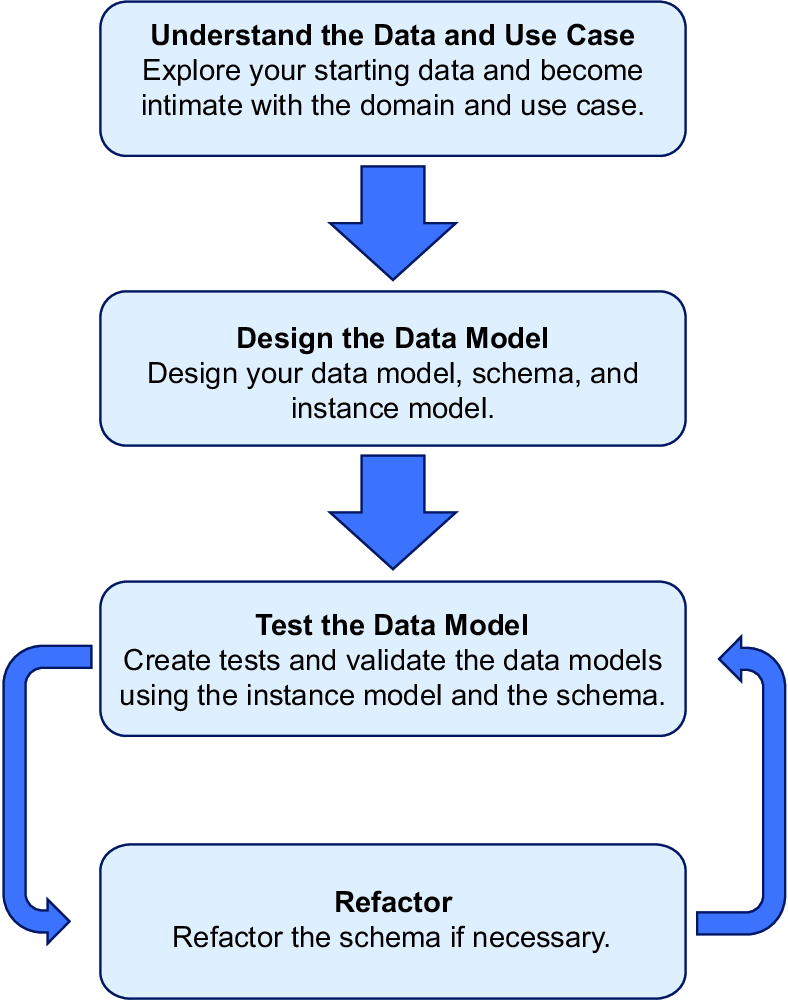
Use the process diagram to trace the transformation from nongraph data to a tested and refined graph data model. section 8.2






















