liveBook · Manning

Epoch

As explained in LLMs in Production

An epoch is one complete pass through a machine-learning training dataset.

An epoch is one complete pass through a machine-learning training dataset. Training processes the data in batches, calculates loss, and adjusts model weights repeatedly so predictions improve over time. section 5.2.1

Track an epoch alongside the practical risks of training:

  • More epochs can improve performance on training data, but excessive training can cause overfitting on unseen data. section 5.2.1
  • Use monitoring and techniques such as early stopping, dropout, or learning-rate scheduling to support generalizability; none is a guaranteed solution. section 5.2.1
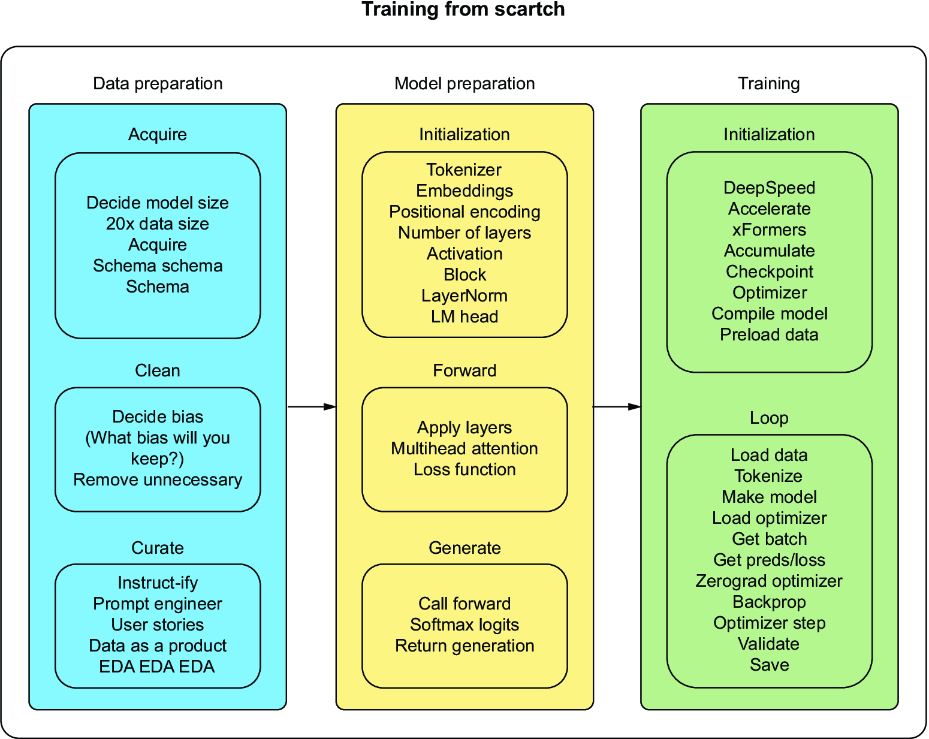
Figure 5.2 A simplified version of all the steps necessary to train a language model (large or otherwise) from scratch. You must have data, then define all of the model behavior, and only then proceed to train.
figure

Situates epochs within the broader sequence of preparing data, defining model behavior, and training a language model from scratch. section 5.2.1


How LLMs in Production covers it

How deep it goes
Defines an epoch through batches, loss, and weight adjustment while emphasizing monitoring rather than implementation details.
Examples
Uses language-model training from scratch and a pipeline figure showing data preparation, model definition, and training.
What you can do after
Evaluate training progress while balancing improvement on training data against generalization to unseen data.
How it connects
Connects epochs with batches, loss, model weights, overfitting, early stopping, dropout, and learning-rate scheduling.

Also explained in

Compare how 10 books explain epoch →

Related concepts

This explainer was generated by Manning's knowledge graph from the text of LLMs in Production. The section links point to the parts of the book it draws on.






