An event records a significant occurrence, change, activity, transaction, or incident together with information about what happened. In an enterprise, user interactions, system updates, and financial transactions can become structured events published to Kafka topics for other systems to consume and process asynchronously. section 1.2
Use events as self-contained messages that carry context about business activity.
- Publish events to Kafka topics, where subscribing applications can consume and process them in real time. section 1.2
- Distinguish events from states, deltas, and commands: events describe business activity that happened, while commands instruct systems to act. section 3.3
- Keep each Kafka message semantically self-contained; split a large message containing many events into one message per event. section 18.5.3
- Send machine-readable event data through Kafka rather than exchanging large files; store files elsewhere and publish a notification containing their address. section 18.5.3
From uploaded PDF to event notification
Store the PDF in object storage, then publish an event through Kafka indicating that the file was uploaded or changed and identifying its address. A consumer retrieves the file after receiving the notification. section 18.5.3
Figure 1.1 Kafka as the central nervous system for data in a company. Every event that takes place in the enterprise is stored in Kafka. Other services can react to these events asynchronously and process them further.
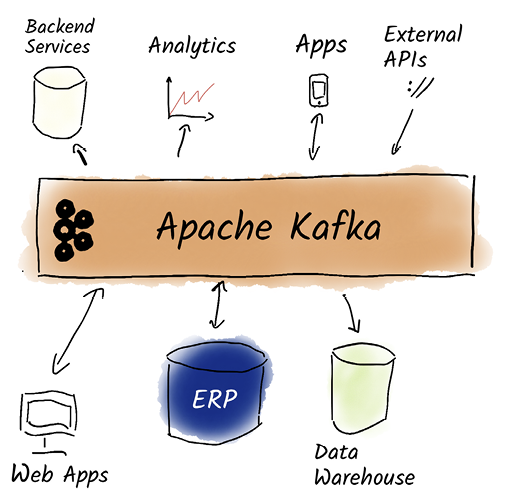
Visualizes Kafka as an enterprise data nervous system in which services react asynchronously to stored events. section 1.2
Figure 18.9 Don’t use Kafka to exchange files between systems. Use, for example, an object storage solution instead, and then use Kafka to notify others about the file that was uploaded or changed.
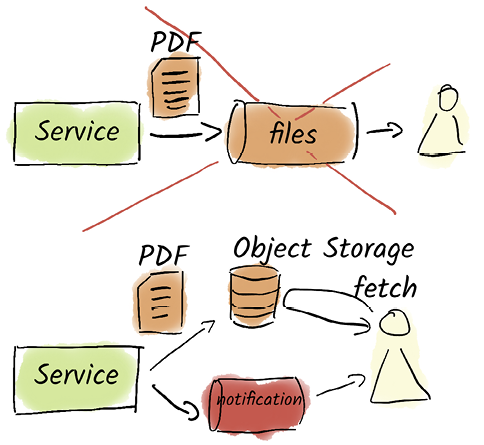
Contrasts Kafka event notifications with inappropriate file exchange and shows object storage as the file location. section 18.5.3

















