liveBook · Manning

Data transformation

As explained in Fast Python: High performance techniques for large datasets

A data transformation is an operation or function that maps input data or its representation to modified data or a different representation.

A data transformation maps input data or its representation to modified data or another representation. For performance, choose an approach by considering the data and algorithm demands alongside the computing architecture. section 1.4

Compare approaches against available resources, goals, and trade-offs:

  • Consider techniques spanning Python’s built-in features, concurrency, NumPy, Cython, pandas, and Apache Arrow. section 1.4
  • Account for the system running the code, from a single computer to GPU-enabled, cluster, or cloud environments. section 1.4
Figure 1.4 Underlying hardware architectures must be taken into account when choosing high-performance coding solutions.
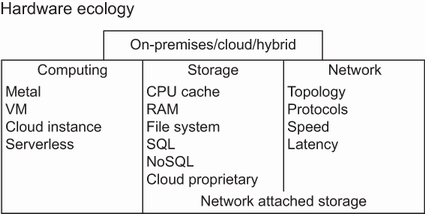
Use the hardware overview to consider architecture when choosing a high-performance solution. section 1.4


How Fast Python: High performance techniques for large datasets covers it

How deep it goes
Frames performance decisions around data, algorithms, and architecture without detailing a specific transformation procedure.
Examples
Names Python built-ins, concurrency, NumPy, Cython, pandas, and Apache Arrow as performance-focused areas.
What you can do after
Evaluate and select an efficient solution suited to the system’s resources, goals, and problem.
How it connects
Connects data processing to CPU design, GPUs, storage, network protocols, and cloud architectures.

Also explained in

Compare how 20 books explain data transformation →

Related concepts

This explainer was generated by Manning's knowledge graph from the text of Fast Python: High performance techniques for large datasets. The section links point to the parts of the book it draws on.

















