liveBook · Manning

Data transformation

As explained in Grokking AI Applications

Data transformation is the modification, restructuring, cleaning, or reformatting of data to meet processing or storage requirements.

Data transformation prepares information for processing or storage. In an AI workflow, records from spreadsheets, CRM systems, databases, or other digital systems can be reshaped into inputs an LLM can process, while generated text can be reformatted for downstream use. section 7.0

A practical transformation workflow can:

  • Extract data from files, databases, or enterprise applications. section 7.4
  • Load, join, sort, aggregate, and reshape records into formats suitable for LLM prompts. section 7.4
  • Split generated text into separate fields for database storage or downstream systems. section 7.0

Customer-record processing

A CRM table containing customer names, ages, and recent purchases can feed a reusable prompt across many records. The resulting text can then be split into fields and stored for later use. section 7.0

Figure 7.1 The LLM’s input text might come from various sources—files, systems, or users.
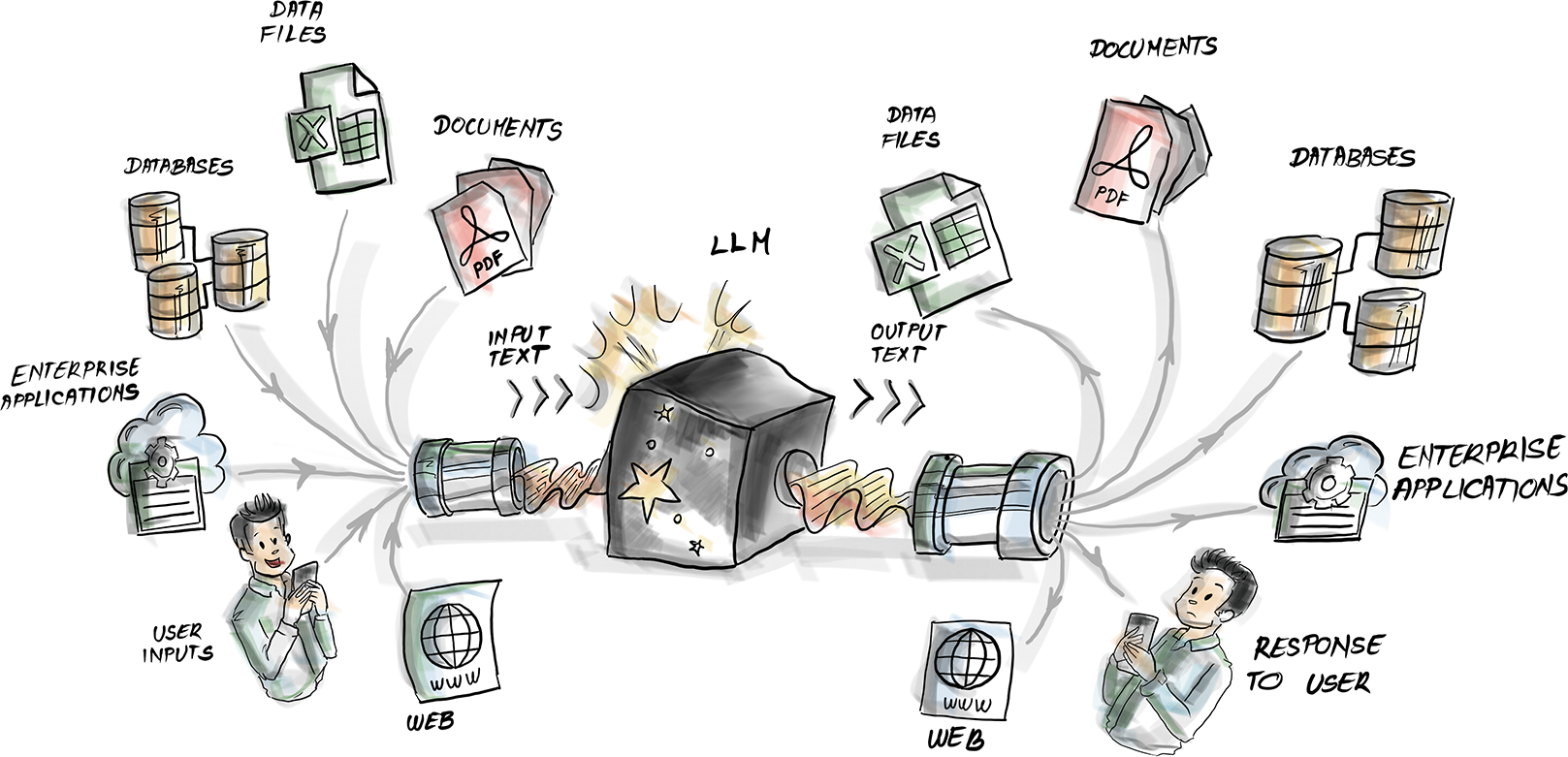
Shows how LLM input text can originate from files, systems, or users. section 7.0


How Grokking AI Applications covers it

How deep it goes
Explains transformation through KNIME nodes that load, join, sort, aggregate, and reshape data for LLMs.
Examples
Uses CRM records, spreadsheets, databases, generated strings, and separated output fields as transformation examples.
What it assumes
Assumes familiarity with structured business records and LLMs while distinguishing conversational inputs from system-provided data.
What you can do after
Apply it via KNIME and Langflow to prepare structured inputs and integrate transformed outputs with downstream systems.
How it connects
Connects data transformation with large language models, structured data, aggregation, and external-system integration.

Also explained in

Compare how 20 books explain data transformation →

Related concepts

This explainer was generated by Manning's knowledge graph from the text of Grokking AI Applications. The section links point to the parts of the book it draws on.

















