A workflow state records where a clinical order, encounter, or specimen stands at a particular point in its lifecycle. In an EHR, state is active system behavior: it coordinates responsibilities, advances tasks, and captures data as clinical work proceeds. section 2.2 section 2.2.3
Treat each state change as part of a structured clinical event:
- Identify the actors responsible for the action, including clinicians, staff, laboratories, algorithms, and connected systems. section 2.2.3
- Record the transition and its associated data, including the action, priority, encounter, date, and time. section 2.2.3
- Anchor the event to the patient through a reliable identifier, such as a medical record number. section 2.2.3
CBC order and specimen
When Dr. Brown signs a CBC order, the EHR changes the order from signed to active and records the test, priority, encounter, and signature time. Later, specimen collection advances the encounter through states such as pending, in progress, and ready for analysis while recording the responsible actors. section 2.2.3
Figure 2.3 The integration of Actors, State, and Data forming a Clinical Event.
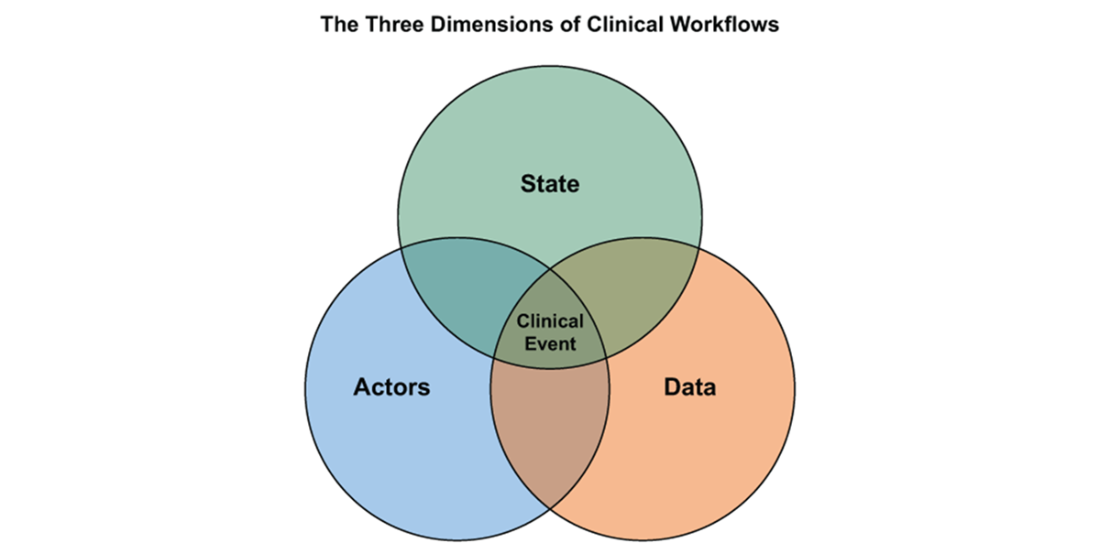
Use the figure to relate actors, state, and data as the three coordinated dimensions of a clinical event. section 2.2
Figure 2.5 The divergence between complex clinical reality and structured system data.
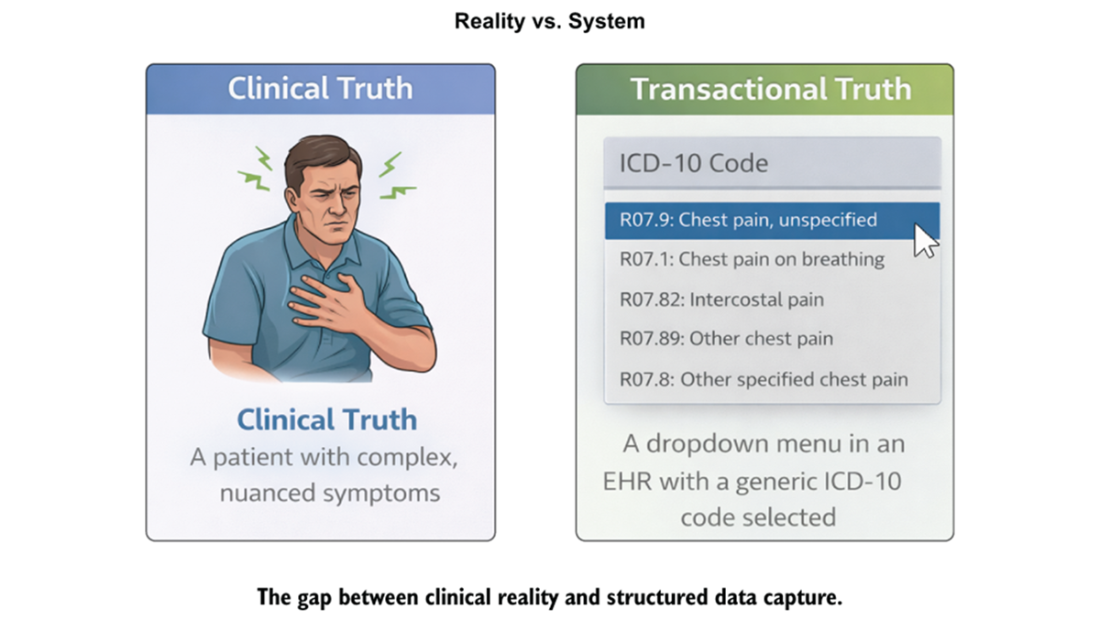
Use the figure to examine how complex clinical reality is represented through structured workflow data and states. section 2.2.3