Hiring helps build a capable, cohesive development team. Lead developers may help even when an engineering manager is the hiring manager, influencing the skills and team dynamics the team needs. section 12.3 section 12.3.2
Practical ways to contribute include:
- Screen résumés for relevant languages, frameworks, tools, project complexity, problem-solving, collaboration, and evidence of continued learning. Clear formatting makes relevant information easier to find. section 12.3.2
- Use interviews to explore coding, system design, debugging, collaboration, and how candidates handle challenges and deadlines. section 12.3.2
- Consider whether the talent pool is broad enough; reflect on unconscious bias and seek candidates from different demographics. section 1.1
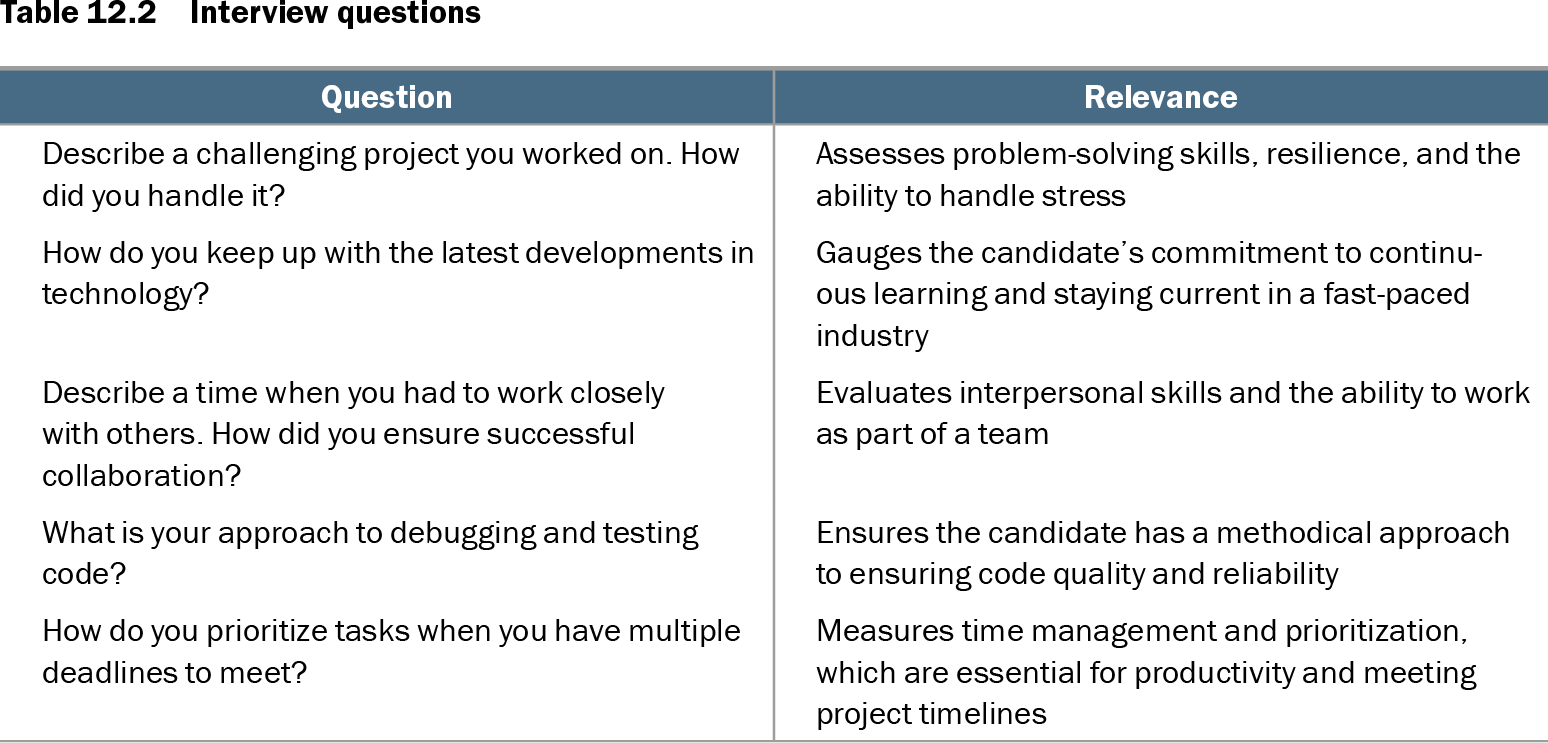
Table 12.2 Interview questions (view table figure)
| Question |
Relevance |
|---|---|
| Describe a challenging project you worked on. How did you handle it? |
Assesses problem-solving skills, resilience, and the ability to handle stress |
| How do you keep up with the latest developments in technology? |
Gauges the candidate’s commitment to continuous learning and staying current in a fast-paced industry |
| Describe a time when you had to work closely with others. How did you ensure successful collaboration? |
Evaluates interpersonal skills and the ability to work as part of a team |
| What is your approach to debugging and testing code? |
Ensures the candidate has a methodical approach to ensuring code quality and reliability |
| How do you prioritize tasks when you have multiple deadlines to meet? |
Measures time management and prioritization, which are essential for productivity and meeting project timelines |
Interview prompts connect questions about projects, learning, collaboration, debugging, and deadlines with the skills they assess. section 12.3.2