liveBook · Manning

Human-in-the-loop

As explained in "Looks Good to Me"

The human capacity to evaluate software decisions using nuance, context, history, and broader situational understanding.

Human judgment evaluates software decisions through nuance, context, history, and the larger situation. In code reviews, it protects meaningful attention by leaving repetitive checks to automation. section 5.1

Use human judgment to:

  • Decide whether an upgrade is safe when services depend on a removed feature. section 5.1
  • Distinguish a correct declaration from one that introduces a scoping or debugging problem. section 5.1
  • Validate AI findings and make the final code-review decision without outsourcing critical thinking. section 13.6

Upgrade decision

An automated tool recommends updating an outdated library and can perform the upgrade. A reviewer delays it because several services rely on a feature removed in the latest version. section 5.1

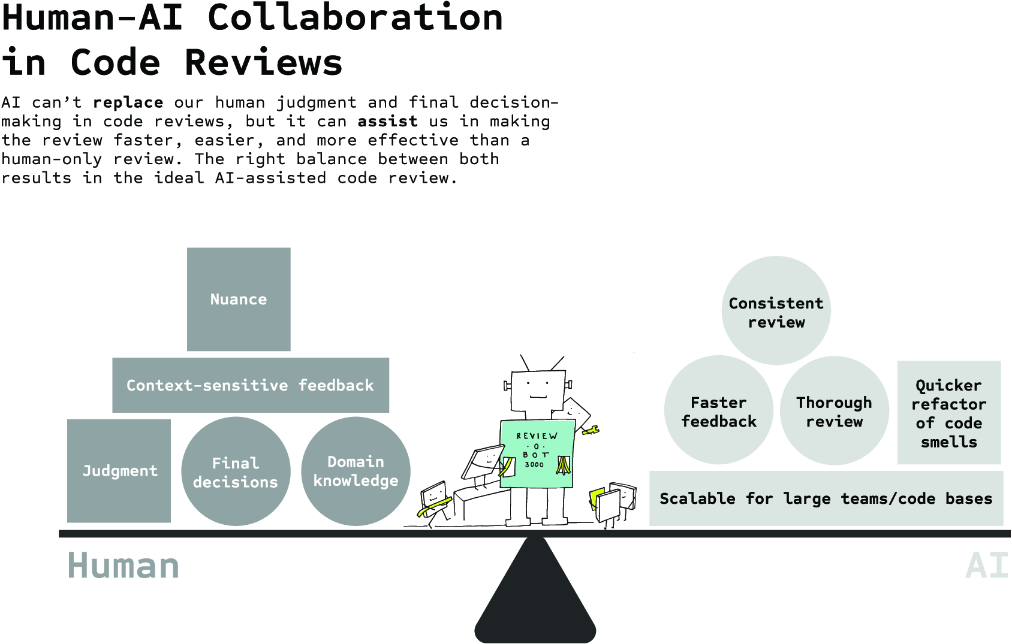
Figure 13.8 The future of code reviews relies on a balance between human and AI responsibility.
figure

Use the human–AI responsibility balance to keep automated assistance subordinate to human validation and final decisions. section 13.5


How "Looks Good to Me" covers it

How deep it goes
Explains contextual decisions through upgrade and variable-scope examples, but stops short of prescribing a formal judgment framework.
Examples
Uses library upgrades, removed service features, variable declarations, and AI-assisted pull-request reviews.
What it assumes
Assumes familiarity with code reviews and software dependencies while treating contextual reasoning as a developer responsibility.
What you can do after
Evaluate software decisions, validate AI feedback, and make final code-review decisions using context and nuance.
How it connects
Connects human judgment with automation, code review, artificial intelligence, context, and critical thinking.

Also explained in

Compare how 17 books explain human-in-the-loop →

Related concepts

This explainer was generated by Manning's knowledge graph from the text of "Looks Good to Me". The section links point to the parts of the book it draws on.














