Metadata is information about data: its sources, structure, formatting, properties, and relationships. In a data warehouse, it describes schemas, tables, columns, data types, row counts, and key references. section 11.3.3 section 11.5
Metadata helps analysts and stakeholders discover available resources and understand how to use them. Combined with plain-language descriptions, it supports searchable documentation and self-service analytics through a data catalog. section 11.3.3
Useful metadata commonly records:
- Available schemas, tables, and columns. section 11.3.3
- Data types, row counts, and primary or foreign key references. section 11.3.3
- Descriptions of a table or column’s purpose and usage. section 11.3.3
Book metadata for competitive analysis
A scraped book site can provide titles, prices, ratings, publication years, and edition counts. Parsing these fields into a typed dataframe creates metadata that can support analysis of competitor pricing and promotions; repeated scraping can help keep the information current. section 10.2.4
Figure 11.17 Information schemas contain metadata about the information in a data warehouse.
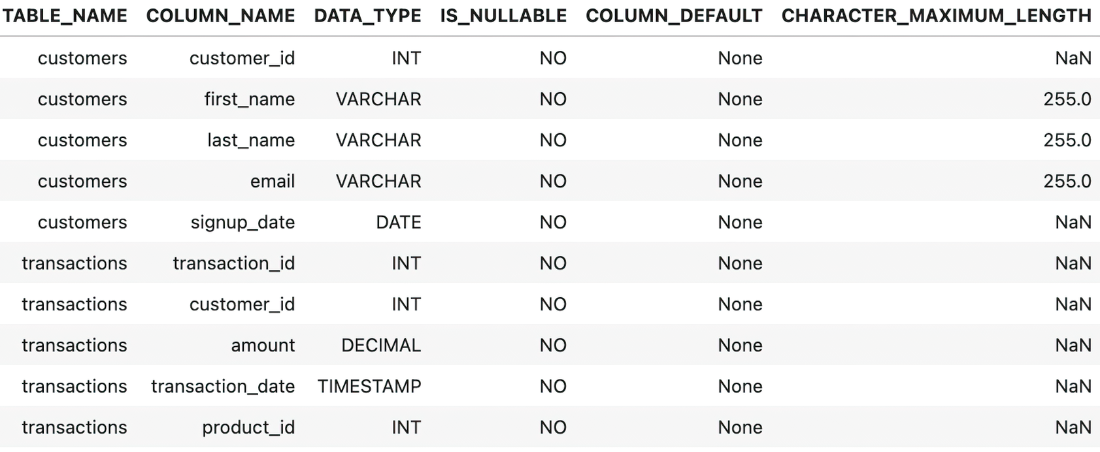
Use the information-schema view to inspect how warehouse metadata describes available data. section 11.3.3




















