liveBook · Manning

Metadata

As explained in Kafka Streams in Action, Second Edition

Metadata is information describing the current state, configuration, membership, and permissions of a Kafka cluster.

Metadata records the current state and configuration of a Kafka cluster, allowing brokers and Kafka Streams instances to coordinate activity. It supports leadership, topic replication, membership, and access decisions. section 2.8

Kafka uses metadata to track:

  • Cluster membership, including brokers joining the cluster and unavailable brokers being removed. section 2.8
  • Topic configuration, including leaders, partition counts, and topic-specific overrides. section 2.8
  • Access control, including which users or software may read from or write to particular topics. section 2.8
  • Kafka Streams ownership and application-server locations, enabling queries to reach the instance responsible for a key. section 13.2

Forwarding an interactive query

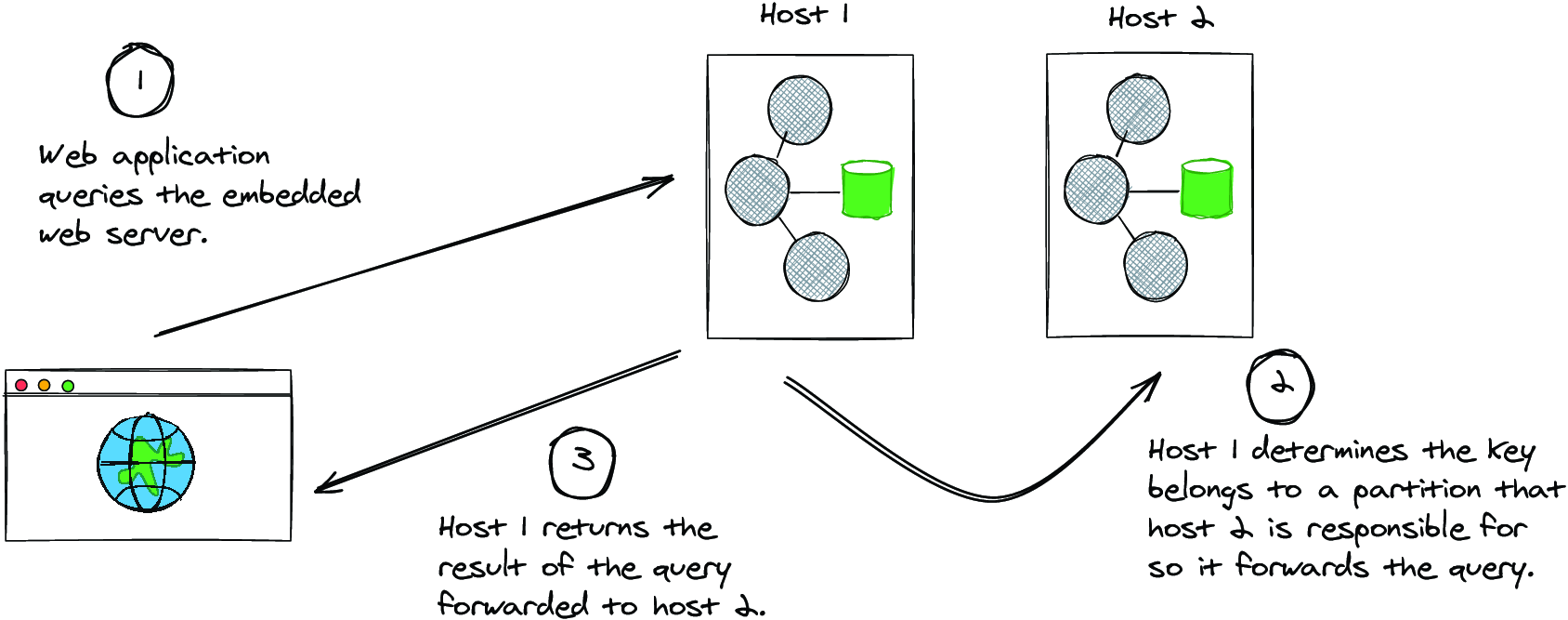
A Kafka Streams instance receives a query for a key. It hashes the key modulo the partition count, checks metadata to identify the owning instance, and forwards the request using that instance's host and port. section 13.2

Figure 13.5 Determining the correct host for a given query
figure

Follow the query-routing flow from a key to the Kafka Streams instance that owns its partition. section 13.2


How Kafka Streams in Action, Second Edition covers it

How deep it goes
Explains membership, topic configuration, permissions, and query routing, while deferring detailed metadata management and cluster administration.
Examples
Uses broker membership, topic leaders, partition ownership, and forwarded queries as concrete metadata examples.
What it assumes
Assumes familiarity with Kafka brokers, topics, partitions, and Kafka Streams applications while avoiding administrator-level detail.
What you can do after
Evaluate/understand how Kafka tracks cluster state and how Kafka Streams routes key-based queries.
How it connects
Ties metadata to cluster membership, topic configuration, partitions, replication, leaders and followers, rebalancing, and interactive queries.

Also explained in

Compare how 21 books explain metadata →

Related concepts

This explainer was generated by Manning's knowledge graph from the text of Kafka Streams in Action, Second Edition. The section links point to the parts of the book it draws on.


















