A lending model does not receive an applicant’s circumstances as meaningful patterns. Feature engineering transforms raw observations into variables that make patterns easier for a learning method to detect. Choices about which data to collect, keep, create, and how to handle gaps shape what the model can learn and what conclusions it can draw. section 1.2.1 section 1.2.6
Derived features turn observations into measures suited to a predictive task:
- For customer churn, combine purchase and interaction records into average monthly spending, days since the last purchase, or recent support requests. section 1.2.1
- For lending, transform income, debt, and repayment history into debt-to-income ratio, credit utilization, or recent delinquency indicators. section 1.2.6
Figure 1.1 The hidden stack of modern intelligence. Panel A shows the five layers that shape how learning systems are built, evaluated, and used. Panel B lists the book’s foundational works in chronological order from top to bottom. Filled circles show the multiple layers informed by each contribution.
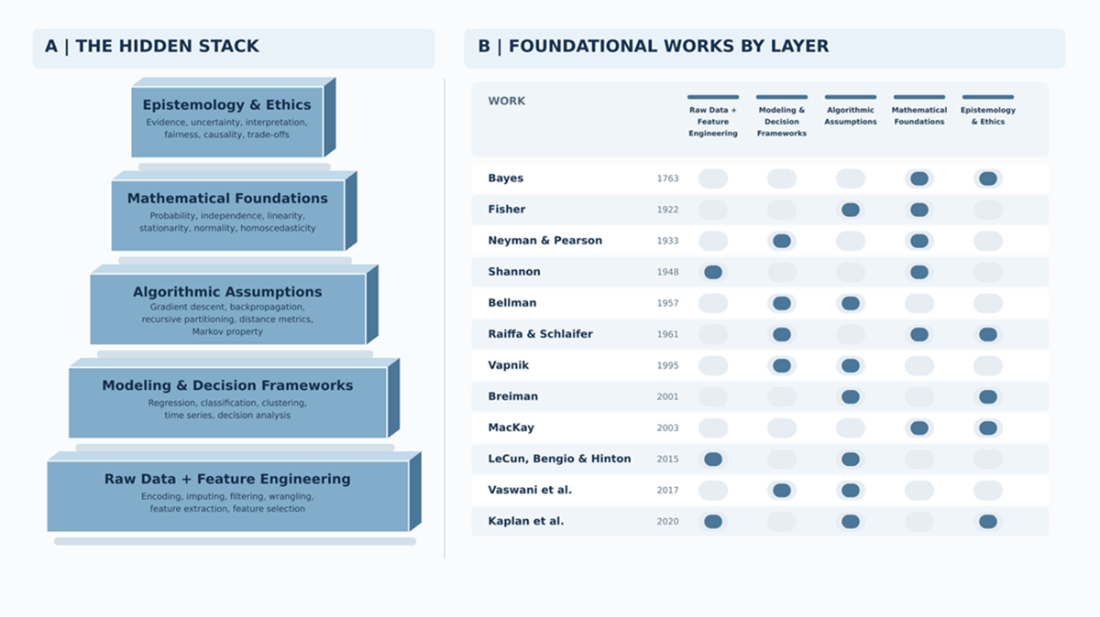
The stack diagram locates feature engineering at the data layer and shows how assumptions there connect to later modeling and evaluation. section 1.2