Model architecture is the technical plan for how a software project’s components, modules, and features relate to one another and how the system will be built. A diagram can make those relationships visible to the team. section 2.1.3
The plan must serve the project, not just describe its technology. Translate business requirements into technical requirements, then work with the project team on an approach that fits the budget and provides a stable system. Gather feedback as estimates and decisions change. section 2.1.3 section 1.2.5 section 1.2
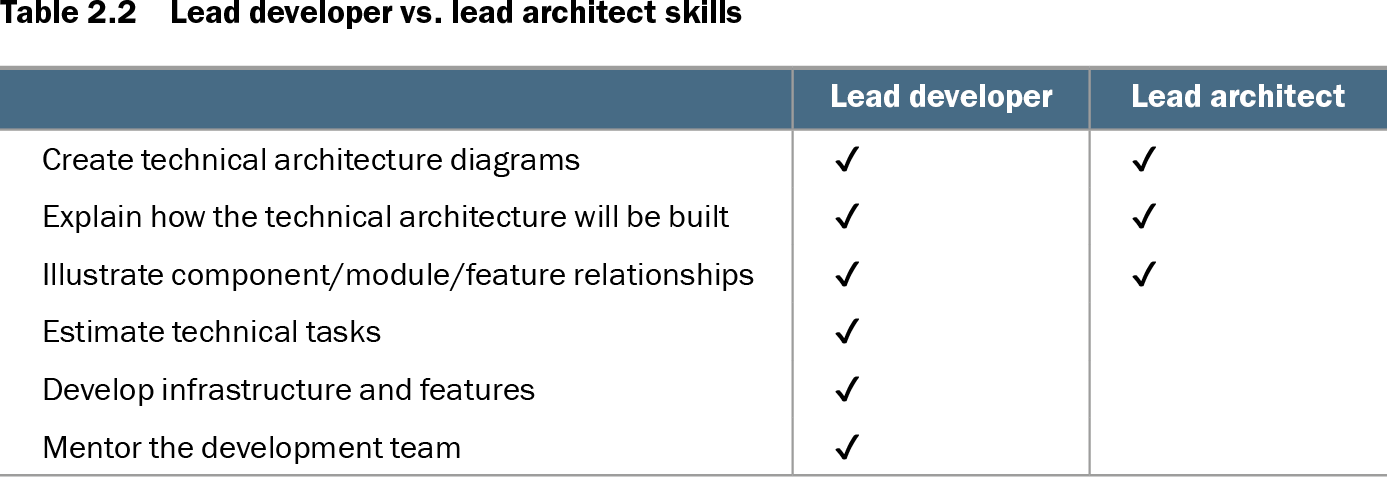
A lead architect may focus on detailing and illustrating the plan. A lead developer may also implement it, establish coding standards, and guide the team. Organizations do not always separate the roles. section 2.1.3
Table 2.2 Lead developer vs. lead architect skills (view table figure)
| Lead developer |
Lead architect |
|
|---|---|---|
| Create technical architecture diagrams |
✓ |
✓ |
| Explain how the technical architecture will be built |
✓ |
✓ |
| Illustrate component/module/feature relationships |
✓ |
✓ |
| Estimate technical tasks |
✓ |
|
| Develop infrastructure and features |
✓ |
|
| Mentor the development team |
✓ |
Compare who diagrams component relationships with who also estimates tasks, builds features, and mentors developers. section 2.1.3
Start small, then reuse what works
A simple “Hello, World” application is a place to practice building an architecture rather than only adding features to an existing one. As your experience grows, aim for a reusable prototype that saves the team from starting every project over. Shadow experienced leads, ask about their decisions, and seek an outside opinion when you are unsure. section 12.1.2 section 1.2.5