Os
The os module is Python’s standard-library interface to operating-system services, including filesystem, pathname, process, and environment operations.
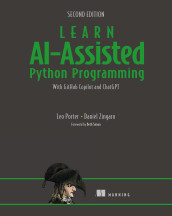
Learn AI-Assisted Python Programming, Second Edition
os is a Python standard-library module providing an interface to operating-system services, including filesystem operations.
- How it is used
- Automates filesystem tasks by listing directories, joining paths, checking existence, and creating output folders.
- How deep it goes
- Demonstrates os.listdir, os.path.join, os.path.exists, and os.mkdir in task-focused functions without exploring operating-system internals.
- Examples
- Uses PDF cover insertion, duplicate-free picture merging, collision-free filenames, and disposable test directories.
- What you can do after
- Apply it via Python to inspect directories, construct paths, detect existing files, and prepare output folders.
Read how Learn AI-Assisted Python Programming, Second Edition explains os →
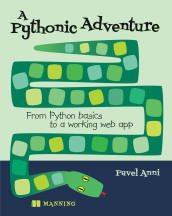
A Pythonic Adventure: From Python basics to a working web app
The Python os module provides portable interfaces to operating-system functionality, including filesystem operations.
- How it is used
- Checks whether an orders file exists before loading saved data.
- How deep it goes
- Defines os.path.exists() and applies it in a small file-loading function, without exploring broader operating-system interfaces.
- Examples
- Uses an orders.json file and a load_orders() function as its concrete example.
- What you can do after
- Apply os.path.exists() to choose between reading an existing file and returning an empty data structure.
Read how A Pythonic Adventure: From Python basics to a working web app explains os →

The Quick Python Book, Fourth Edition
The os module is a Python standard-library module that provides operating-system interfaces, including filesystem and pathname operations.
- How it is used
- Uses `os` and `os.path` to work with pathnames, inspect files, and process directory trees.
- How deep it goes
- Works through a multi-operation filesystem script and compares alternatives, without descending into operating-system implementation details.
- Examples
- Calculates the total size of non-symlink `.test` files, then moves matching files into a backup directory.
- What you can do after
- Build it from scratch: combine `os` traversal and path functions to filter, total, and move files.
Read how The Quick Python Book, Fourth Edition explains os →
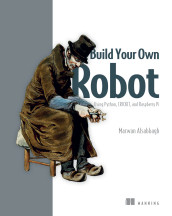
Build Your Own Robot: Using Python, CRICKIT, and Raspberry Pi
The Python standard-library module that provides interfaces to operating-system facilities, including access to environment variables.
- How it is used
- Reads environment-based motor calibration values before driving the robot.
- How deep it goes
- Demonstrates importing os, required lookup, defaulted get(), float conversion, and use in throttle control.
- Examples
- Uses ROBO_DC_ADJUST_R and ROBO_DC_ADJUST_L to compensate left and right wheel power.
- What you can do after
- Apply it via the os module to configure motor power without editing the script.
Read how Build Your Own Robot: Using Python, CRICKIT, and Raspberry Pi explains os →

Build Financial Software with Generative AI (From Scratch)
The Python os module provides interfaces to operating-system services, including access to process environment variables.
- How it is used
- Uses environment variables to configure containerized API and database connections without hardcoded credentials.
- How deep it goes
- Explains importing os, retrieving variables with getenv, supplying defaults, and inserting values into a connection string.
- Examples
- Uses POSTGRES_USER, POSTGRES_PASSWORD, .sql_server.conf, env_file, and DATABASE_URL as concrete configuration artifacts.
- What you can do after
- Operate/configure containers by reading database credentials from environment variables and composing an application connection string.
Read how Build Financial Software with Generative AI (From Scratch) explains os →
Related concepts
- os.listdirhas part · os.listdir is a Python standard-library function that returns the names of entries in a specified filesystem directory.
- pathlibalternative to · pathlib is a Python standard-library module providing object-oriented classes and operations for representing and manipulating filesystem paths.
- environment variableuses · An environment variable is a named value supplied through an operating-system or process environment and made available to programs for runtime configuration or information.
- modulekind of · A module is a distinct, bounded software unit that groups related code or functionality and provides an organizational or interaction boundary within a larger system.
- os.pathhas part · os.path is Python’s standard-library interface for manipulating and inspecting filesystem pathnames according to operating-system-specific conventions.
These guides are generated from the text of Manning books by Manning's knowledge graph and link to the sections they draw on. The full books are available on liveBook and at manning.com.