P99 latency is the response time below which 99 percent of measured operations complete. Use it to set a performance budget for each layer, not just an average for the whole request. section 9.5
Booking request
A booking request waits for synchronous calendar and video-provider calls before returning 201. The local Postgres write takes milliseconds, but Google Calendar at EventManager.ts:873 and Zoom at videoClient.ts:82 delay the response. Because a fan-out waits for its slowest branch, the slowest provider dominates the request's latency and threatens the p99 budget. section 9.5
Diagnose percentile latency by asking:
- Which hop is most likely to exceed its layer budget? section 9.5
- Which synchronous calls block the response, and which can run asynchronously? section 9.5
- Which branch controls the tail when requests fan out? section 9.5
Figure 9.8 A request trace before and after the 200 OK response. The left side shows the synchronous work the user waits for: web server calls to the cache, database, and external APIs. The right side shows the asynchronous work that runs after the response is sent: a queue fans out jobs to workers that send email, fire webhooks, and update the search index.
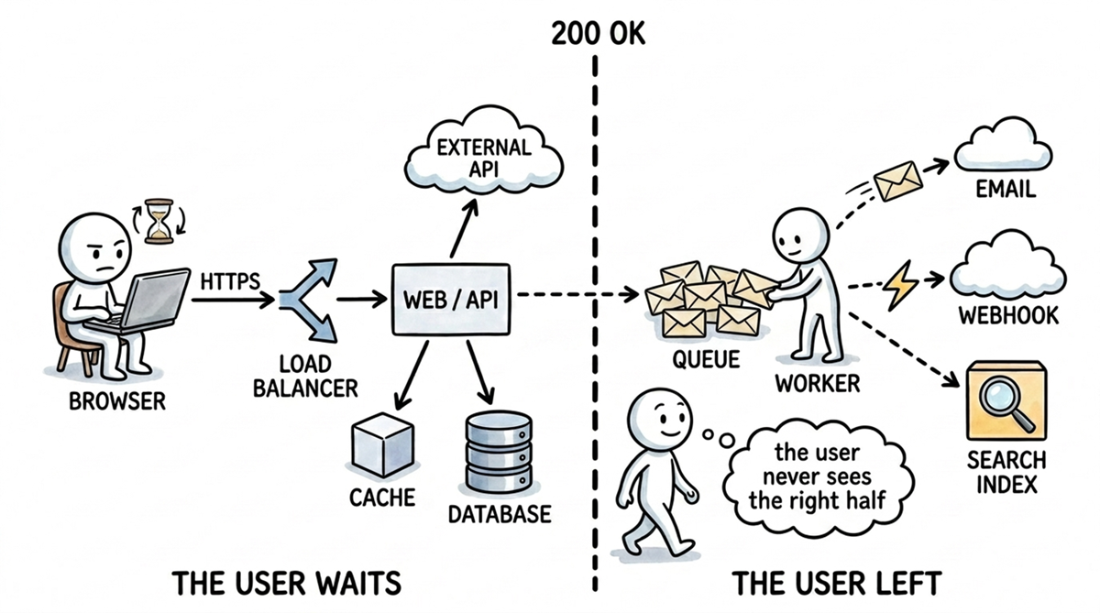
Compare the work users wait for before 200 OK with queued work that runs afterward. section 9.5