A pixel is a local position in a digital image whose value records brightness or color. An image can treat each pixel as one scalar input variable, so a 224 × 224 image forms a 50,176-dimensional input space; each complete image is one point in that space. section 7.2.2
Pixel values also carry spatial clues. Uniform regions such as a wall provide little semantic information, while sharp local changes identify edges and often reveal object silhouettes. section 10.3.2
Pixels connect image data to two complementary computations:
- Color representation: an RGB pixel can take values between black and white, with successive bytes representing red, green, and blue components. section 7.2.2
- Edge detection: a 2D convolution kernel suppresses neighborhoods with equal pixel values and responds strongly where pixel values change sharply. section 10.3.2
- Classification: the collection of pixel values becomes an input vector that a classifier maps to categories such as face or not face. section 7.2.2
Detecting a silhouette
In a photograph of a person against a white wall, wall pixels are relatively uniform, whereas pixels along the silhouette change sharply. A suitable convolution kernel produces little response on the wall and a large positive or negative response near the silhouette. section 10.3.2
Figure 10.11 image often helps us analyze the image.
|
(a) Input image |
|
(b) Vertical edges detected by applying 2D convolution
|
|
(c) Horizontal edges detected by applying 2D convolution
|


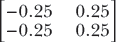

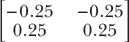
Compare the input image with its vertical- and horizontal-edge outputs to see how local pixel changes become image features. section 10.3.2