liveBook · Manning

Planning

As explained in Investing for Programmers

A planning pattern is an agent architecture in which an agent dynamically constructs and executes a sequence of actions toward a complex goal.

Planning is an agent architecture that dynamically constructs and executes an action sequence for a complex goal. It turns a broad objective into an ordered path rather than relying on one fixed response. section 9.1.2

Planning belongs to a family of agentic design patterns that separates different ways to improve or extend agent behavior:

  • Reflection evaluates past actions and adjusts later strategies through feedback. section 9.1.2
  • Tool use delegates retrieval, transformation, or computation to external tools, libraries, or APIs. section 9.1.2
  • Multi-agent collaboration distributes work across cooperating agents. section 9.1.2
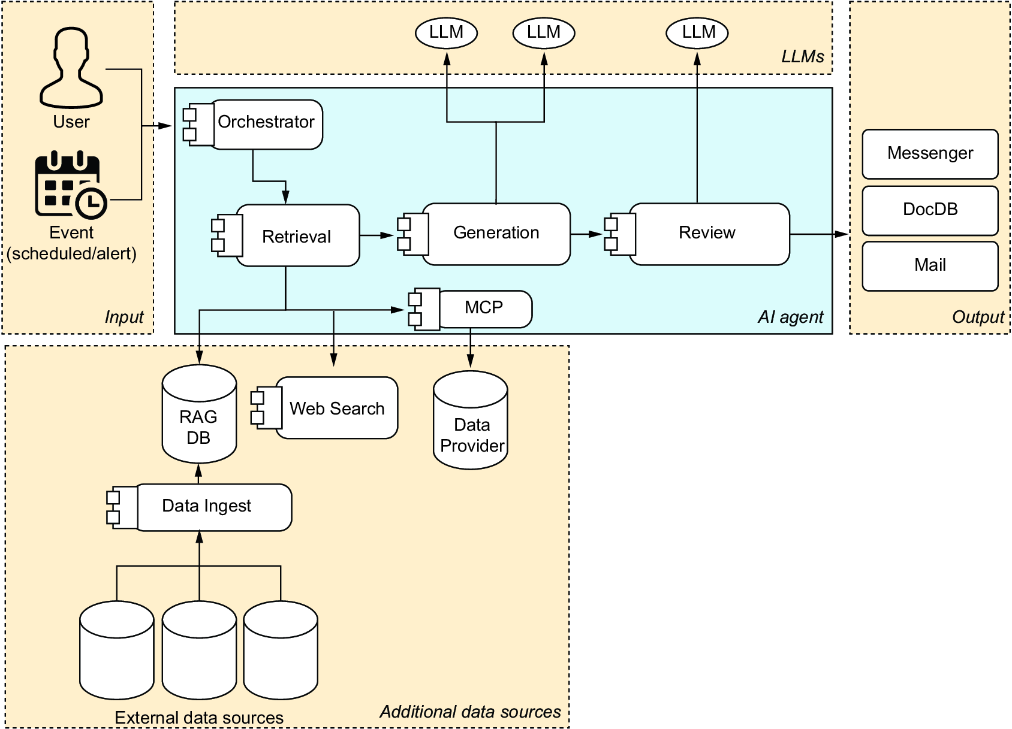
Figure 9.1 A reference workflow for an AI agent
figure

Use the reference workflow to connect planning with the broader execution loop of an AI agent. section 9.1.2


How Investing for Programmers covers it

How deep it goes
Defines planning within a pattern taxonomy but does not detail planning algorithms, representations, or execution mechanics.
Examples
Uses a reference workflow for an AI agent as the main visual artifact.
What you can do after
Evaluate/understand planning as a way to organize agent behavior around ordered actions and complex goals.
How it connects
Connects planning with reflection, tool use, and multi-agent collaboration as complementary agentic design patterns.

Also explained in

Compare how 6 books explain planning →

Related concepts

This explainer was generated by Manning's knowledge graph from the text of Investing for Programmers. The section links point to the parts of the book it draws on.



