Privacy is people’s ability to control access to information about themselves and how that information is collected or used. In analytics, it requires protecting agency, dignity, confidentiality, and rights because even simple reports or graphs can affect lives. section 8.0 section 8.1.1
Practical privacy work combines several responsibilities:
- Mask personally identifiable information such as location and IP address in analytical storage. section 8.1.1
- Obtain informed consent before research, explain questions, risks, benefits, timing, and opt-out options, and honor stated commitments. section 8.1.2
- Investigate demographic or geographic differences in outcomes before decisions systematically exclude people from opportunities. section 8.1.1
- Recognize that legal protections and regulation vary by setting and continue to change across jurisdictions. section 8.2
Marketing research on artificial intelligence
A marketing analytics team studying people’s hopes, fears, and concerns about artificial intelligence uses consent materials that describe sensitive questions, possible stress, expected benefits, and participation requirements. section 8.1.2
Figure 8.2 An informed consent document for a survey conducted by a product analytics team
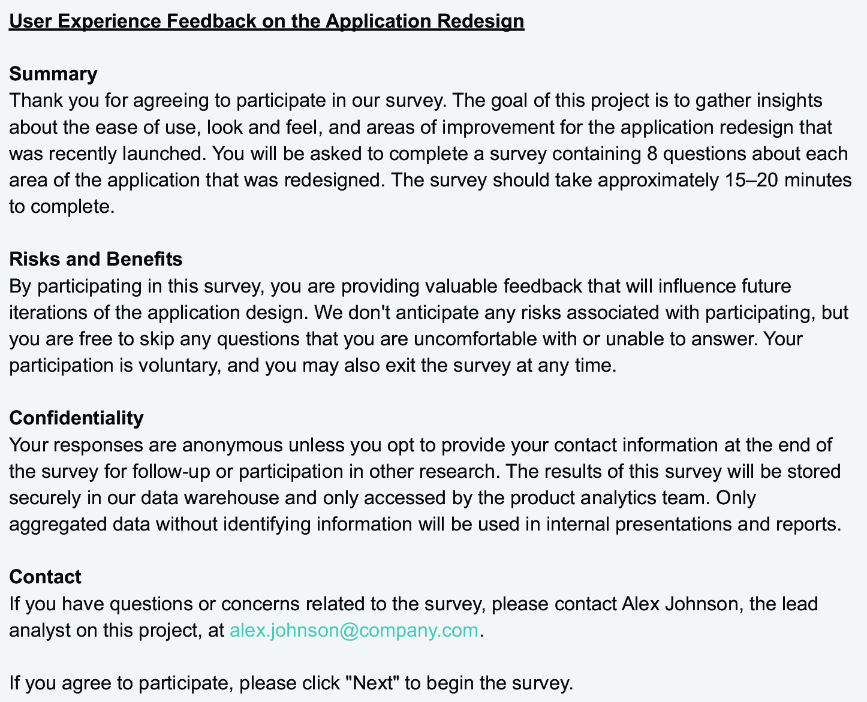
Use the informed consent document as a concrete checklist for communicating research expectations, risks, benefits, timing, and voluntary participation. section 8.1.2




















