A brand may know what customers browse and buy, but that knowledge does not grant unlimited permission to use it. Privacy means giving people clarity and control over their data, collecting only what is needed, and protecting it after collection. For marketers, the practical challenge is to personalize experiences without sacrificing consent or trust. section 1.2 section 2.1
Privacy matters throughout the customer relationship, not just when a consent notice appears. GDPR and CCPA have raised expectations for responsible data use; customers also expect meaningful value in exchange for information they share. First-party data can support relevant marketing, but its value depends on transparent, consent-driven collection. Restrictions on third-party tracking make opaque data practices less dependable, not more acceptable. section 1.1 section 1.2 section 2.0
Three principles turn that goal into organizational decisions:
- Accountability: leadership, marketing, IT, and other teams own the data practices within their roles. Document systems and train teams so they can explain what data supports their work. section 2.2
- Transparency: explain how and why data is used in plain language, with more detail available for people who want it. section 2.2
- Choice and control: let people decide what to share and manage their preferences through straightforward controls. section 2.2
A useful privacy explanation
“We use your purchase history to recommend products” tells a customer more than a dense, generic notice. It identifies both the data and its purpose; further detail can remain available for those who want it. section 2.2
Protection must continue after collection. Encryption at rest and in transit, prompt vulnerability patching, and strict access controls help address exposure risks. The reported breaches affecting 23andMe and T-Mobile in 2023 illustrate why poor protection can bring scrutiny and damage trust. Privacy is therefore both a question of permitted use and a continuing data-security responsibility. section 2.1
Figure 2.2 Marketing data architecture
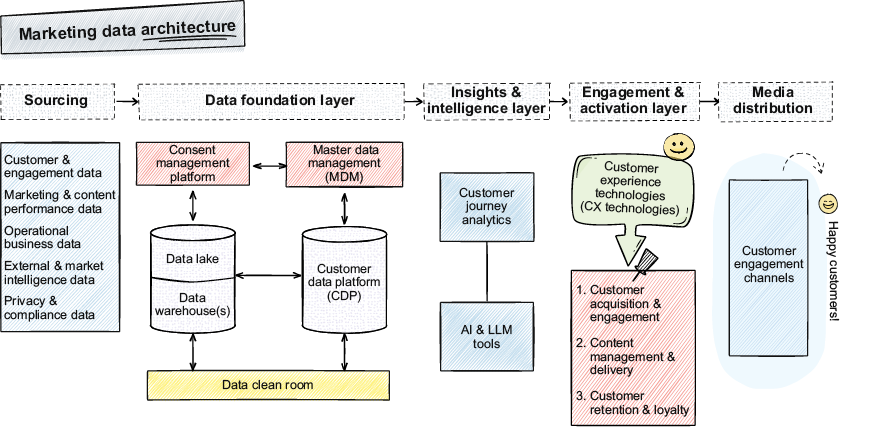
Follow data from sourcing through the data foundation, insights and intelligence, engagement and activation, and media distribution. Each layer is a point to consider minimization, protective technologies, and user controls—not a place to defer privacy to the next team. section 2.3
The final channel changes the practical checks. Websites and apps need restrained collection, consent, and clear settings. Email must honor consent and unsubscribe requests; social media raises questions about platform sharing and user preferences. External collaboration may use data clean rooms or privacy-enhancing technologies, while aggregated or anonymized data can support campaign measurement with less personal-data collection. No single measure replaces responsible decisions across the whole journey. section 2.3.5 section 2.3




















