A private key is the secret half of a public-key pair. In HTTPS, the server keeps it private while sharing the corresponding public key with browsers; data encrypted with the public key can be decrypted only with the private key. section 28.2
Private keys appear in two practical roles:
- TLS certificates contain public and private parts; the server uses the private part while establishing HTTPS connections. section 28.2
- JWT development tooling stores signing key material in User Secrets so the API can validate tokens generated by user-jwts. section 25.4.1
- Keep the key secret: exposing it undermines the protection provided by the public-key system. section 28.2
Figure 28.4 The developer certificate is not trusted by default, so apps serving HTTPS traffic using it will be marked as insecure by browsers. Although you can bypass the warnings if necessary, you should instead update the certificate to be trusted.
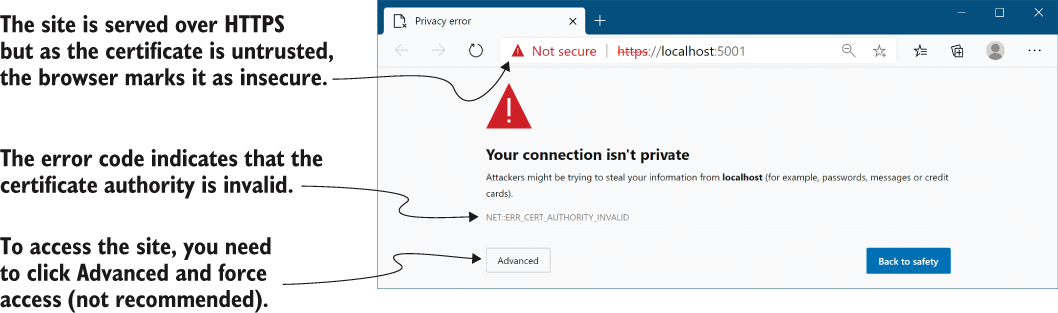
Use the certificate warning example to connect private-key-based HTTPS with certificate trust and browser behavior. section 28.2












