A private key is the secret half of a cryptographic key pair. In a P2P node, it authenticates the node by signing messages; its corresponding public key may be shared, but the private key must never be revealed. section 11.2.1 section 11.2
Private keys appear in several identity and security workflows:
- libp2p derives a unique peer identity from a generated key pair and its public key. section 11.2.1
- SSH uses the local private key to authenticate against a remote server holding the associated public key; the private key is not transmitted. section 11.2.1
- Encryption, decryption, and digital signatures are additional uses, while the detailed treatment here focuses on identity and authentication. section 11.2.1
Generate a libp2p identity
In Rust, generate an Ed25519 key pair and derive a peer ID from its public key: `let new_key = identity::Keypair::generate_ed25519(); let new_peer_id = PeerId::from(new_key.public());` The private portion remains available to the node for authentication and signing. section 11.2.1
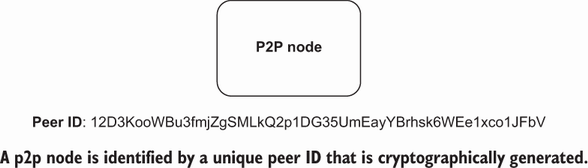
Use the identity diagram to connect a P2P node, its key pair, and its peer ID. section 11.2.1












